Drywall TV feature walls in Yokneam Illit
A gypsum board TV wall planned around the screen: secure backing, hidden cables, sockets, niches, lighting and access to equipment. Scope is priced after checking the wall.
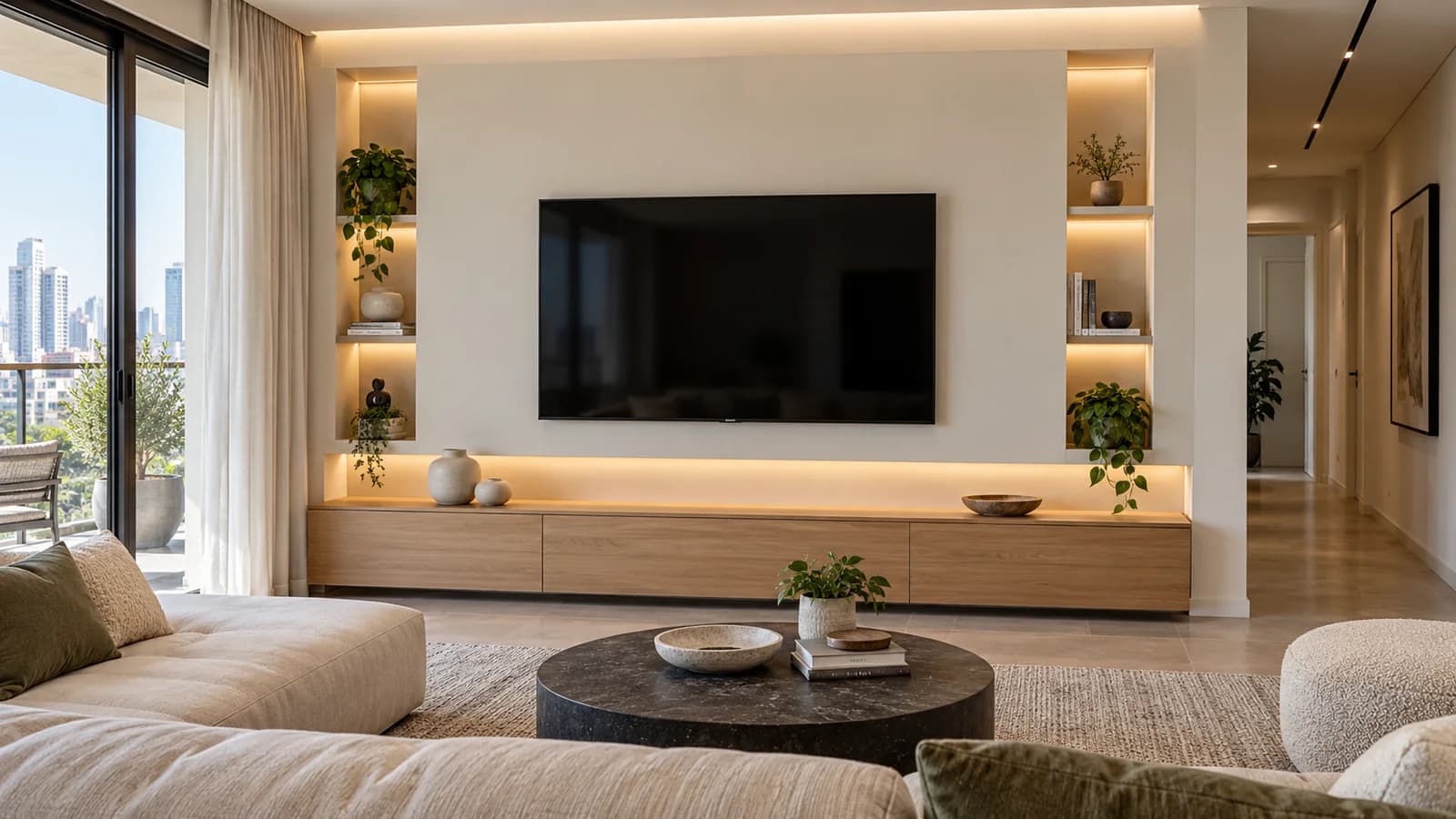
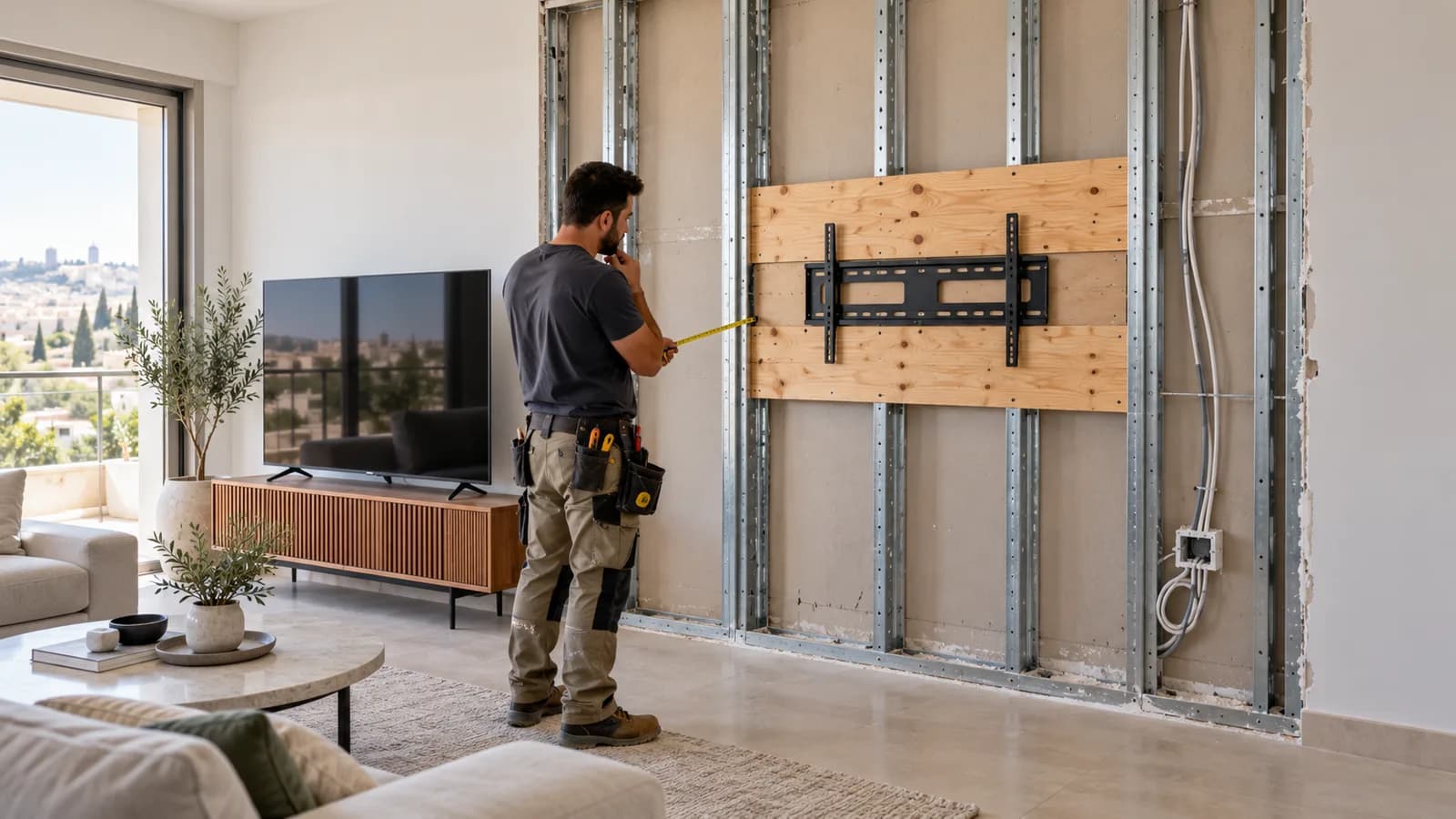
A TV wall should start with the screen, bracket and equipment. Screen height, backing, cable routes, sockets, niche ventilation and access to power supplies are agreed before framing. The finished wall then remains practical after the television is installed.
Choose the right depth
A sound masonry wall may need only a shallow lining for hidden wiring. Niches, shelves and lighting need their own frame and depth. Measure the screen, wall, furniture and circulation first so the feature does not take more room than needed.
What determines the quote
Separate framing and boards, screen backing, niches, cable routes, access panels, LED preparation, skim coat and painting. Electrical points, equipment connection and cabinetry should be specified separately. Send full-wall photos, dimensions, TV size, socket plan and a reference design for an initial estimate.
Handover checks
Confirm the bracket has suitable support, cables are not trapped, and power supplies stay accessible. Check corners and joints under the actual lighting, ventilation in equipment niches and socket locations. A smooth paint finish cannot make a weak fixing safe.
What the work includes
A drywall TV wall brings the screen, bracket, cables, outlets, internet, LED lighting, niches, soundbar, set-top boxes and possible access panels into one detail. The real goal is a wall that works after the equipment is connected, not only a clean shape before installation.
Planning before installation
Before framing, TV size, screen center height, bracket model, furniture, outlets, HDMI, internet, speakers, power supplies, ventilation and access points are fixed. If these points appear after skim coat, the finished wall must be cut, backing moved and paint repaired.
Typical projects in Israel
In Israeli apartments, TV walls are often built on concrete or block walls, near AC routes, large windows and narrow passages. Around Haifa, Hadera, Harish, Caesarea and northern Sharon, depth, strong side light and future access to equipment are especially important.
Mistakes to prevent early
Common mistakes are weak bracket backing, a screen mounted too high, sealed LED drivers, no ventilation for router and set-top boxes, visible wires, decorative niches that are too deep and no service access. These are painful to fix after painting and furniture installation.
Price and scope estimate
Price depends on wall size, number of niches, depth, LED, backing, cable routes, access panels, equipment ventilation, height, corners and finish level under side light. A simple screen preparation and a full TV wall with lighting, shelves and access are different scopes.
Related work stages
A TV wall connects naturally with decorative niches, LED preparation, hidden access panels, AC pipe boxes, electrical work, skim coat and interior painting. The screen, cables, lighting, access and finish then work as one system.
Practice on Israeli projects
On a real project we account for equipment sizes, cable and pipe routing, access to power units and service panels, junctions and finish. Access, the state of the space and careful work in an occupied home also matter. That is why pricing depends not only on meters, but also on hidden details that finish layers will later cover.
Access and service checks
Before the box or niche is closed, the key checks are box dimensions, service access, cable exits, backing, corners, lighting and clean junctions. The working focus stays the same: screen backing, cable routing and serviceable equipment access. These checks reduce misaligned lines, unreachable equipment, avoidable rework and reopening a finished box.
Connection with nearby work
This service often overlaps with lighting, hidden access panels, painting, skim coat and furniture alignment. When framing, joints, access, primer and paint are agreed early, the result looks calmer and depends less on last-minute decisions.
Customer reviews of Nikolai's work
Read all reviews on our site10/10Midragdrywall work after installing slanted windows.Review summaryDrywall finishing around windows in a sloped roof. The customer noted the workmanship and that agreements were kept.
הילה פרי · Midrag · Read on Midrag
10/10MidragLowering the ceiling after installing an air conditioner.Review summaryA ceiling was lowered after air conditioning installation. The customer specifically noted the tidy work and cleanup.
איתי בלוך · Midrag · Read on Midrag
5/5EasyReview summaryQuality, timing, reasonable pricing.
Мариам В. · Easy · Read on Easy
Planning a job in Yokneam Illit
Address and access
For a property in Yokneam Illit, provide the exact address, floor, lift access, unloading options and permitted work hours. These details are checked before arranging a visit and defining the quote.
What to send for an initial estimate
Send a wide view and close-up photos of the work area, approximate dimensions, substrate condition and the result you want. Note any finished surfaces needing protection and work already assigned to another trade. The final scope is confirmed after a site check.
Send photos, dimensions or a short description. A quick call helps understand the construction type, rough budget range and whether an on-site survey is needed.
Relevant services
Projects and work photos
Comparable real work; each card shows its actual city and service.
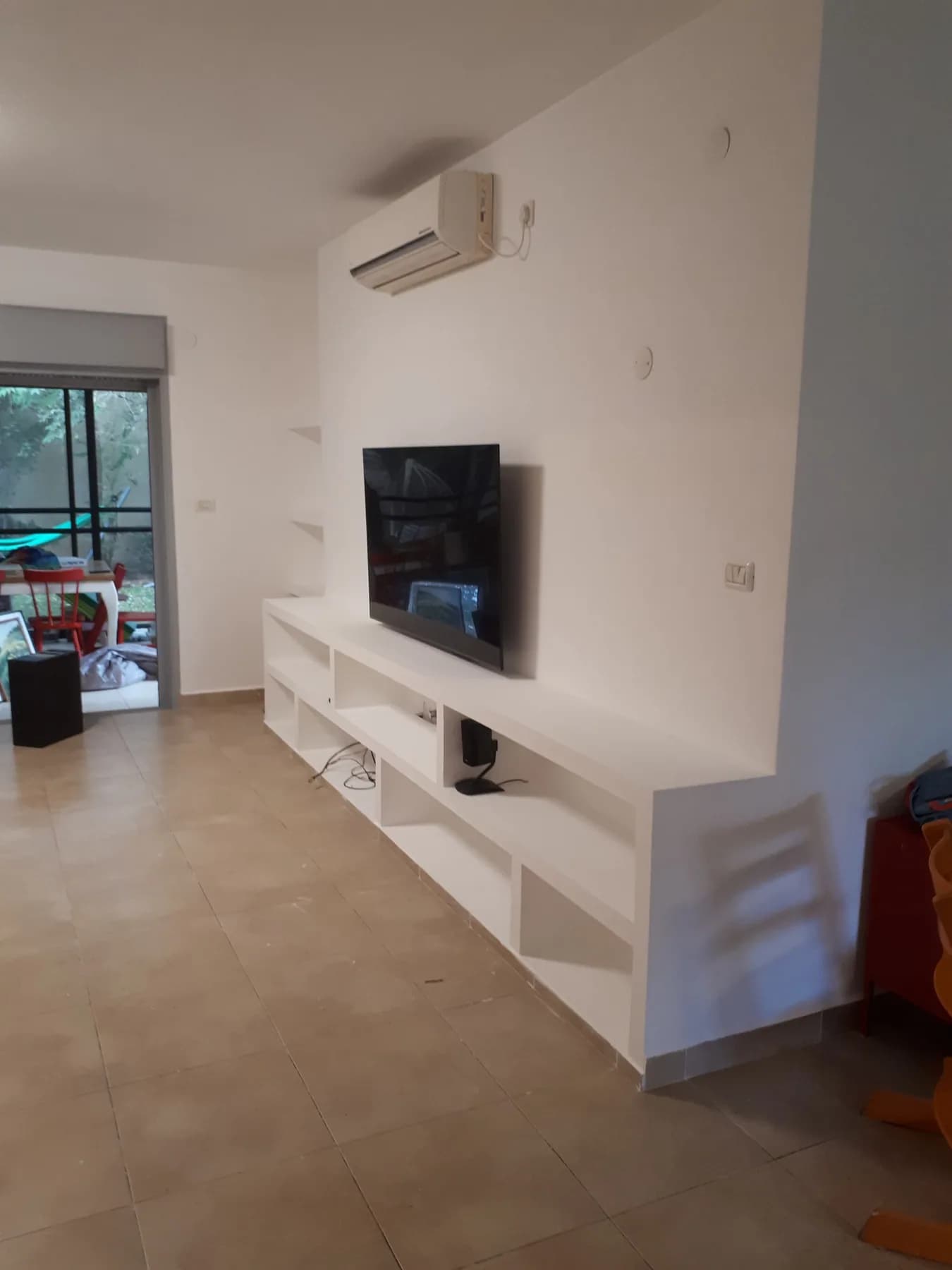
Estimated prices
Questions
Can a TV hang on one gypsum board sheet?
A heavy screen should not rely on a single board. Provide backing, a reinforced frame or fixing into the structural wall, depending on the screen and bracket.
When is a drywall TV wall really needed?
It is useful when the job is more than hanging a screen: hidden cables, backing for the bracket, niches, LED, router, set-top boxes or a soundbar need to be integrated. A good TV wall solves fixing, equipment ventilation and service access, not only a decorative frame around the screen.
What should be decided before framing?
Before framing, confirm TV size and height, bracket model, furniture, outlets, internet, HDMI, speakers, LED drivers, ventilation and access panels. After boards are installed, moving the screen, outlet or cable exit becomes much messier and more expensive.
How is a heavy TV mount prepared?
A heavy screen needs backing, reinforced framing or fixing into the main wall. The drywall board alone should not carry the load. Bracket position is checked against screen center, sofa height, future furniture and cable access.
Can all cables be hidden?
Yes, if cable routes, power, internet, HDMI exits and a replacement path are planned before closing the wall. The goal is to leave a route for future cable changes, not to seal one cable forever inside a finished wall.
Does equipment need ventilation?
Yes. Routers, set-top boxes, amplifiers, soundbars, power supplies and LED drivers produce heat. If they are sealed in an airtight niche, equipment fails faster. Ventilation and access should be part of the wall geometry before skim coat.
How does LED affect finish quality?
LED lighting reveals waves, seams and uneven corners more than normal room light. A TV wall with lighting needs careful framing, straight niches, clean skim coat, primer and a side-light check before painting.
Can a TV wall be estimated from photos?
A preliminary estimate is possible. Send photos of the full wall, room dimensions, ceiling height, TV size, bracket model, sofa position, furniture, outlets, AC and desired niches. A complex wall with LED, shelves and equipment is better measured on site.
Which mistakes damage a TV wall most often?
Common mistakes are weak backing, sealed power supplies, no ventilation, a screen mounted too high, visible cables, deep niches without purpose and no access to equipment. After paint and furniture installation these fixes are especially inconvenient.
Which photos help estimate "TV wall"?
Send a wide room view, close photos of the problem area, floor and ceiling junctions, electrical points, AC routes, doors, future furniture and lighting. These photos show not only area, but also hidden details.
When is access or an inspection panel required?
If drivers, valves, pipe joints, AC lines, cable junctions or equipment remain inside, access should be planned from the start. Closing those points permanently is risky because service work will damage the finished surface.
What is most often underestimated in "Drywall TV wall"?
Preparation, junctions and finish are usually underestimated. The working focus is screen backing, cable routing and serviceable equipment access, but the result also depends on substrate, fixings, joints, primer, lighting and how the job connects with nearby stages.
Guides and practical notes