
Ceiling painting in Herzliya: prevent peeling, patch marks and uneven sheen
How to plan ceiling painting in Herzliya: old coatings, moisture, repaired joints, light, primer, surface area, quote scope and acceptance.
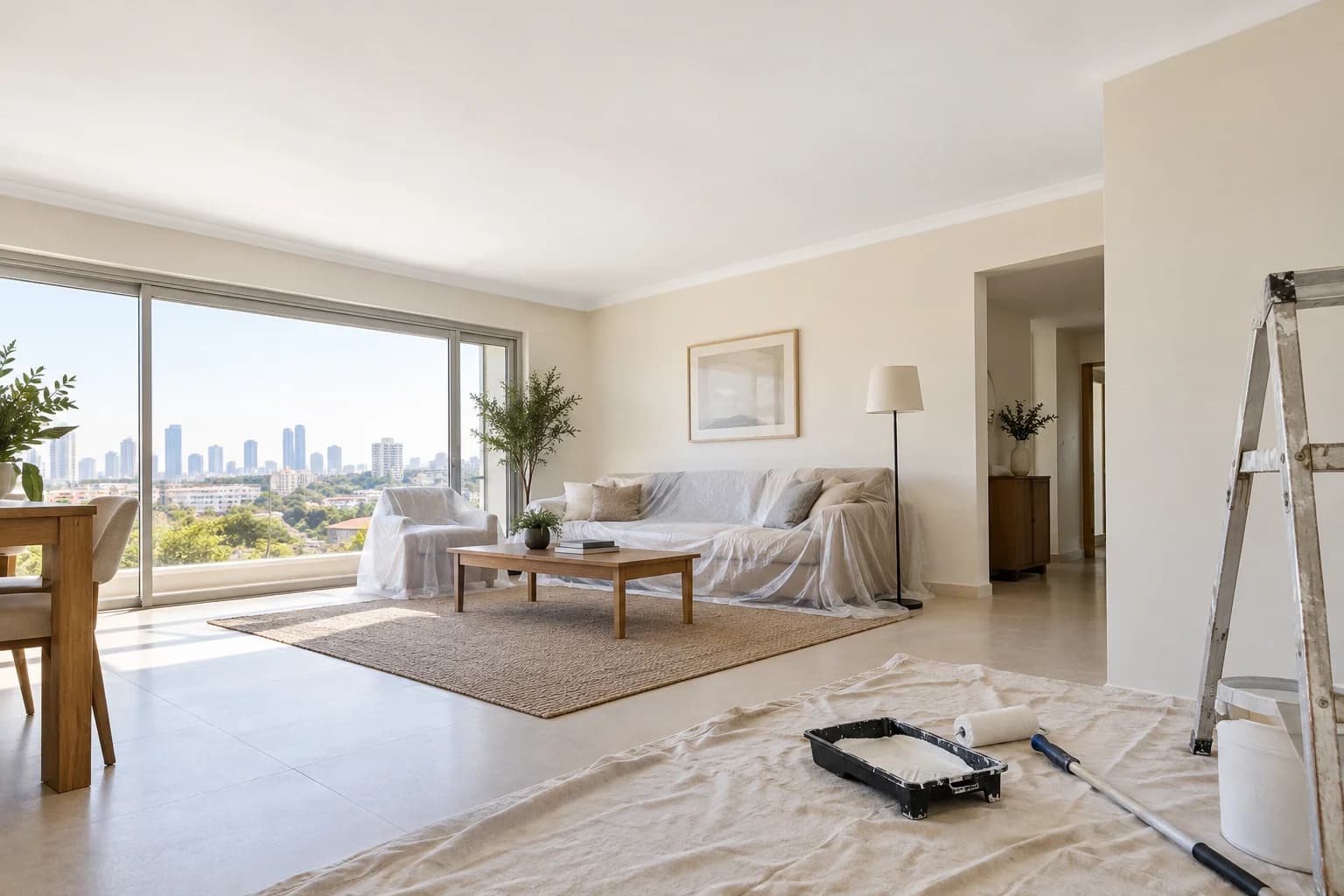
A ceiling has few visual distractions, so a patch or uneven sheen can remain noticeable long after a room is redecorated. Another coat is not always the answer. The old coating, repaired substrate and light direction need assessment first. This guide helps a Herzliya homeowner or office tenant decide what preparation belongs in the quote, calculate the relevant area and accept a finished ceiling fairly. The aim is an appropriate consistent surface, with the cause of recurring defects addressed before paint hides them.
1. Identify the ceiling and its old finish
Establish whether the background is gypsum board, plastered concrete or another construction, and what is known about the existing coating. New filler, old sound paint and a weak or powdery surface can need different treatment. Photograph the whole ceiling and repairs rather than sending only a colour request. Note previous leaks, dropped sections, lighting changes and areas that have peeled more than once. A new paint product must suit the prepared background. An inspection may be needed when the original material is unknown. Do not compare a ready-to-paint new ceiling with an older damaged one solely by their square metres.
2. Separate a dry historical stain from an active problem
Explain whether the mark returns after rain, air-conditioning use or another event. A dry old stain and an ongoing water source are different jobs. Resolve the active cause and assess damaged material before the final coating. Ordinary paint is not a repair for water entry or soft gypsum. The ceiling after a leak guide describes the planning sequence. If a stain needs a compatible treatment within the paint system, specify it rather than promising unlimited extra coats. Record what has been confirmed dry and stable, and identify any investigation that remains outside the decorating contractor's responsibility.
3. Peeling calls for preparation, not concealment
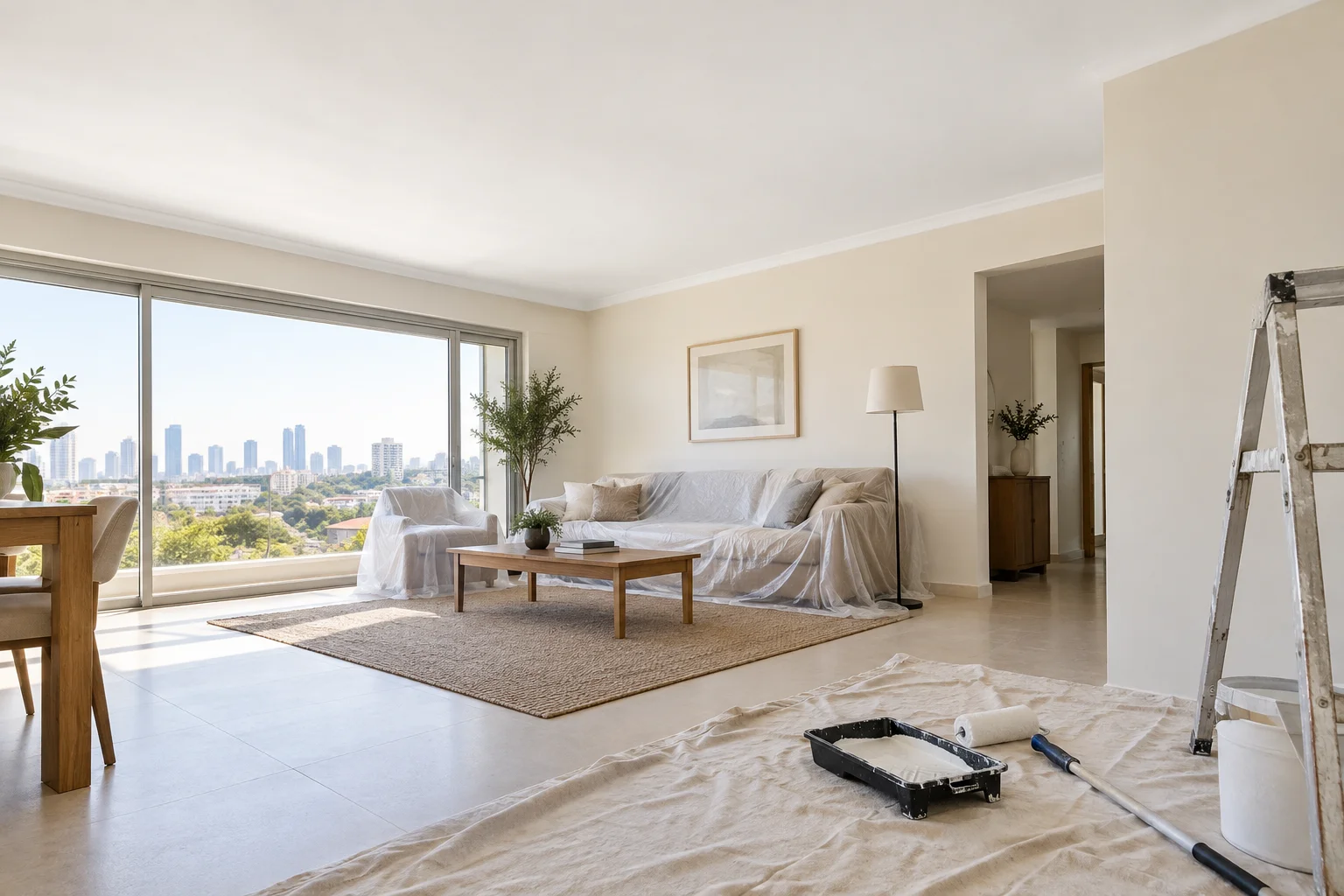
Loose coating cannot become a reliable background just because a new layer covers it. Assess how much must be removed or prepared and why the old finish failed. The appropriate approach depends on the retained coating and substrate; aggressive indiscriminate scraping can damage a different material beneath. Ask for the preparation scope and selected compatible products. Tambour's acrylic paint information is one example of why product instructions matter. A quote that only says two coats does not define preparation. Describe whether failures are local or widespread before committing to a simple room repaint.
4. Decide which repairs require broader smoothing
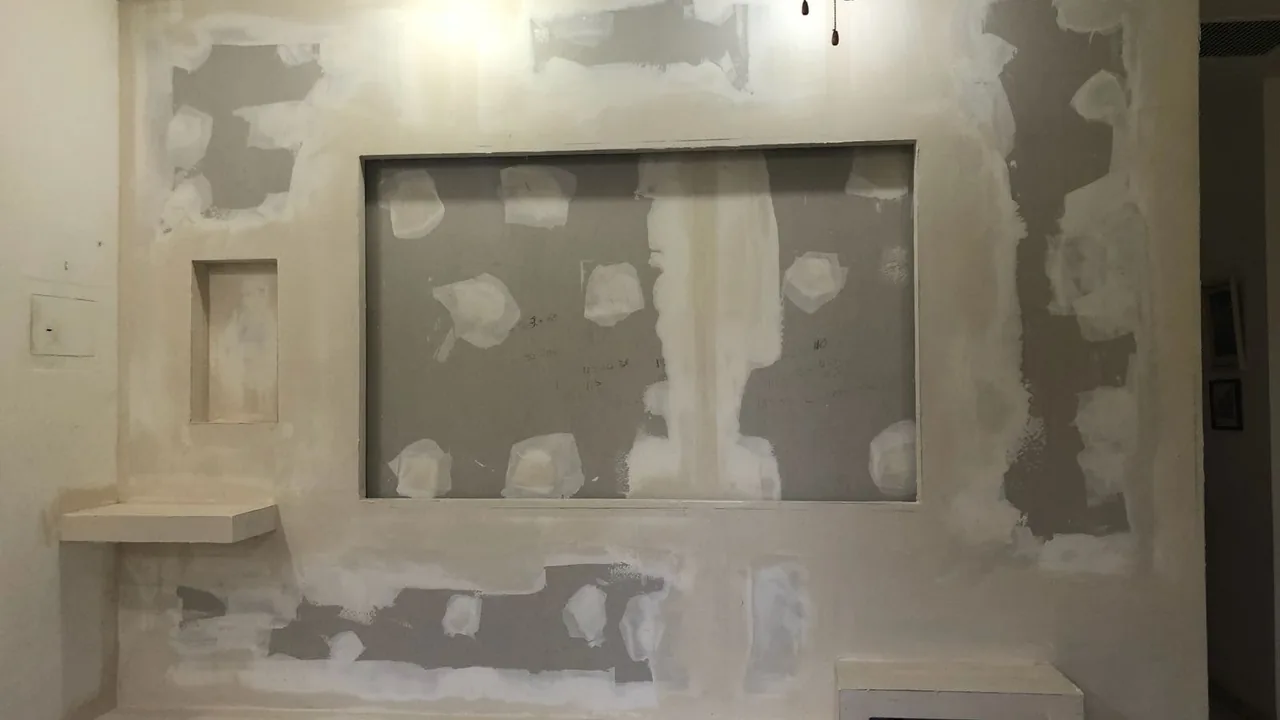
Stable small holes may be repaired locally, while multiple patches or pronounced joints can require more extensive preparation. Recurring cracks need a cause assessment rather than repeated cosmetic filling. Ask what a full ceiling skim would achieve and whether the existing background supports it. It is not compulsory for every repaint, and paint itself cannot straighten a poor plane. Keep ceiling skim coating in Herzliya as a separate scope when justified. Agree where a repair ends and how the surface standard will be assessed. A neat local patch and a fully prepared ceiling are not interchangeable quotation descriptions.
5. Agree lighting and sheen before the work
Wide windows, wall washers and grazing light can make repair transitions more visible. Look at the ceiling under the daylight and installed lighting it will normally receive. Colour, sheen and surface flatness are separate choices. A flatter appearance does not correct a loose background, while more reflection may reveal a seam. Select a suitable product and test the intended look where colour matters. Keep its reference for later repairs. If you require inspection under particularly demanding side light, say so before quoting. Otherwise both parties may imagine different finish levels, and an otherwise clear price cannot settle that disagreement after completion.
6. Coordinate fixtures and adjacent surfaces
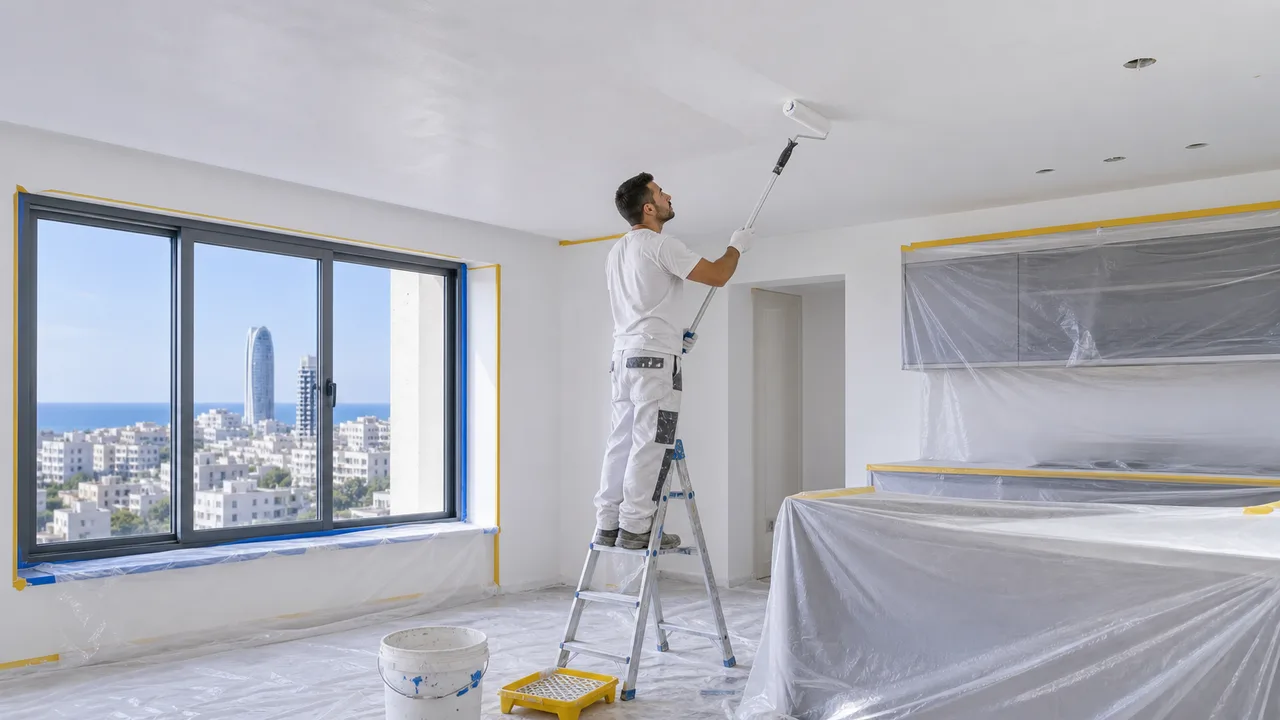
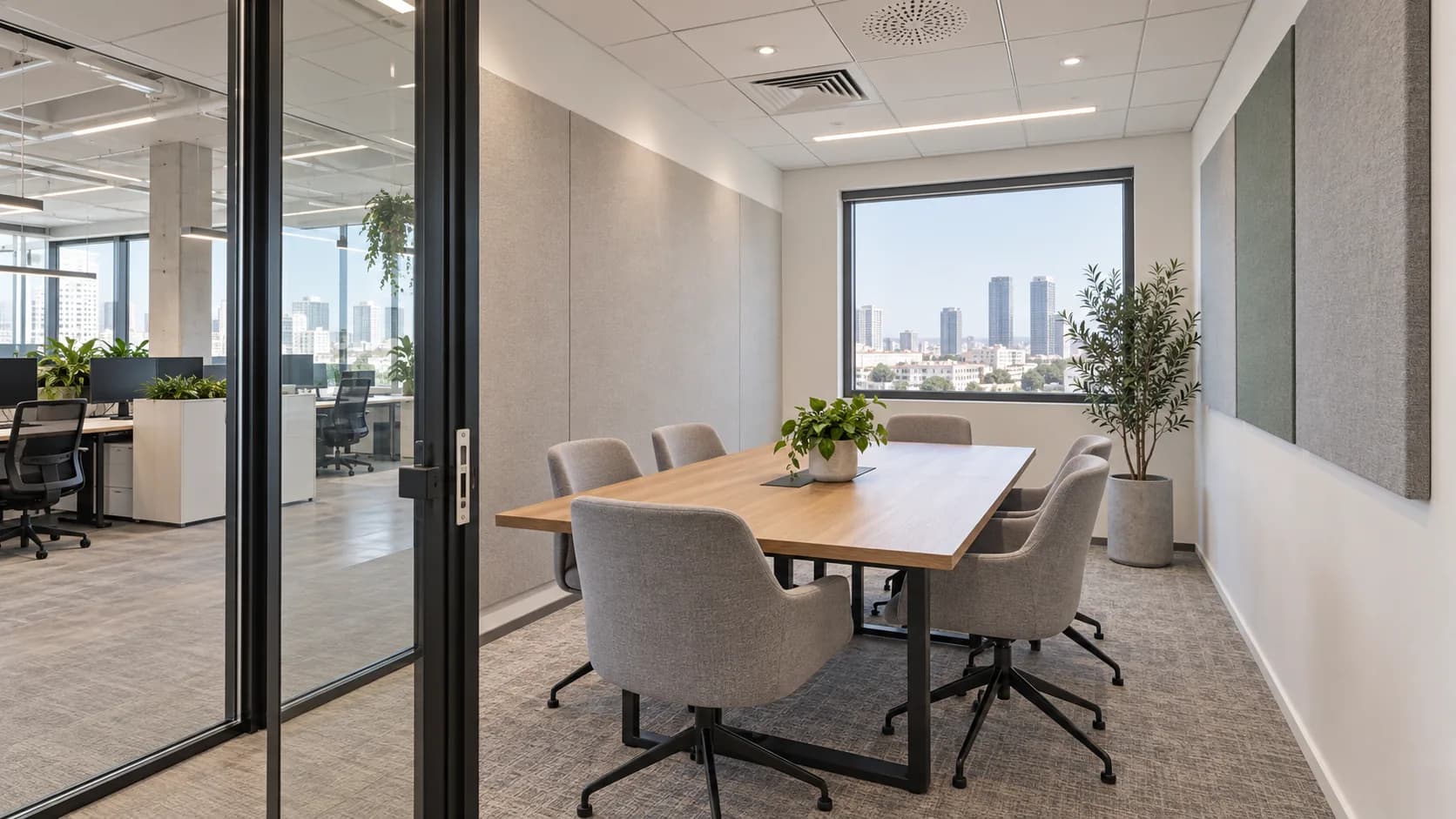
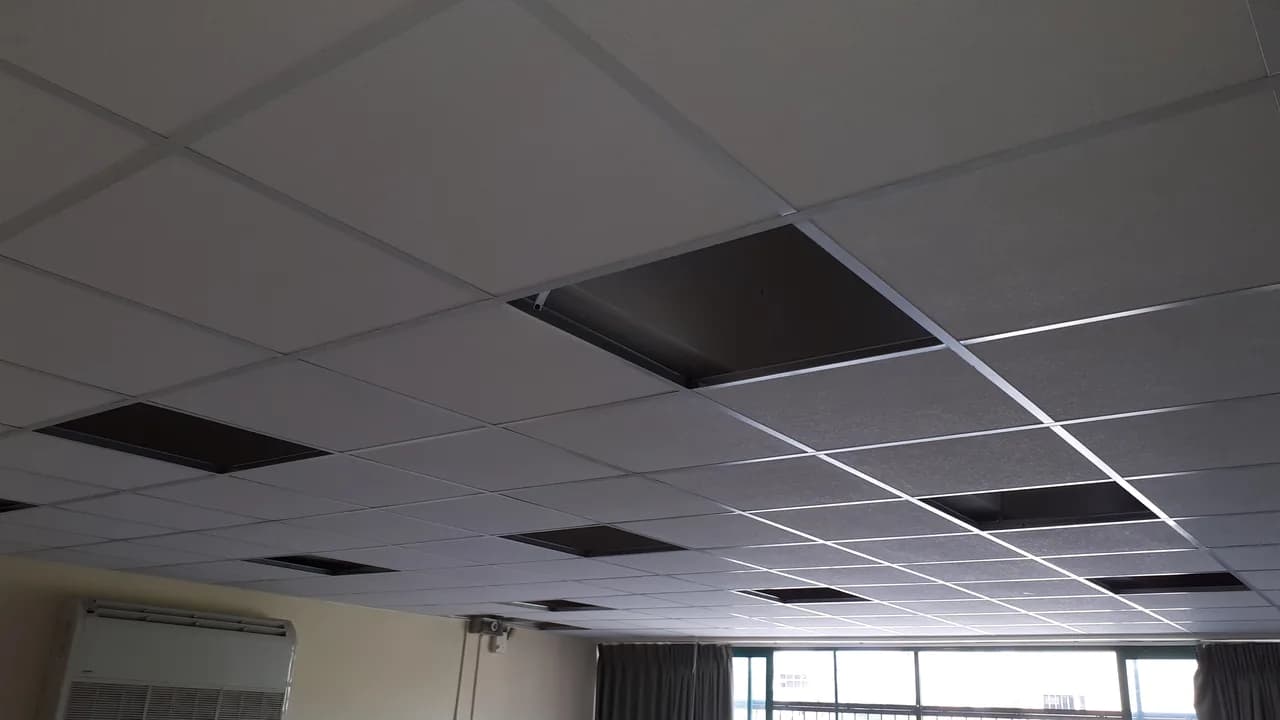
Mark lights, grilles, access covers, detectors and ceiling edges. Relevant specialists handle electrical connections and other systems; painting does not include those installations automatically. Agree what is removed or protected and who reinstalls it. Do not paint shut a required access cover or obstruct equipment for a cleaner appearance. Define the line at walls, cornices and existing ceiling details. The Herzliya ceiling painting service should specify these interfaces. A well-protected room and an unambiguous reinstatement list help avoid arguments about whether the electrician or decorator was supposed to restore an overlooked fitting.
7. Measure the right surfaces
An assumed rectangular room 4 by 5 metres has a flat ceiling area of 20 m². Bulkheads, slopes and decorative returns may create additional faces, while an open void is not a painted surface. Record these details rather than using the apartment's floor area indiscriminately. Agree measurement rules for the quote. The NikoGips indicative ceiling painting range is ₪66–132 per m², so the simple example gives ₪1,320–2,640 for that item. It is not a complete price for every ceiling repair. Height, coating condition, access and protection can change the scope. A drawing helps both parties count the same surfaces.
8. Avoid double counting a room package
The site also includes room painting packages for walls and ceiling. A package is an alternative quotation basis, not an automatic addition to the separately measured ceiling. Check the current price calculator and compare included surfaces, preparation, materials and finish. Local repairs, full skim coating, special stain treatment, protection, waste and taxes should be explicit. If furniture remains, agree who moves it and how the job is staged. A low ceiling-only figure cannot be compared directly with a room package that includes several other tasks. Keep undecided additions separate until their condition and need have been confirmed.
9. Make the working sequence practical
Complete relevant investigations and repairs before clean finishing. Protect floors, furniture and adjoining surfaces, and organise dust-producing work before the final coating. Drying and recoating follow the selected system and site conditions. Dry to touch is not necessarily ready for washing or every fixture to be pressed against it. In a Herzliya property, confirm actual delivery, lift rules and working hours rather than assuming a standard office or apartment arrangement. Agree how the room stays usable, if required, and when items return. The schedule should cover preparation and handover, not just the time needed to roll paint over a ready surface.
10. Inspect a dried ceiling under the agreed conditions
Check missed areas, runs, inconsistent sheen, patch edges and tidy junctions after the relevant drying stage. Use ordinary room light and any additional method agreed beforehand. Record exact locations and distinguish an unfinished coating from a background defect outside the confirmed scope. Test that access covers and grilles remain usable through the relevant responsible trades. Keep paint reference and leftover material where appropriate. A new moisture mark calls for source investigation rather than repeated repainting. The finish acceptance checklist can help organise clear observations, although painting an existing ceiling is not the same job as building a new one.
11. Send a ceiling-specific estimate request
Include the Herzliya neighbourhood, room dimensions, height, ceiling type, overall photographs and close-ups of peeling, stains or repaired joints. Mention previous coatings, lighting, furniture and target date. State whether you want ceiling paint only or a wider room refresh. If the surface is unstable or the leak status is unknown, identify that uncertainty. Nikolai can assess the agreed repair and finish scope; specialist systems and water sources remain with the appropriate trades. The wall paint selection guide provides complementary room advice without replacing the specific preparation needed overhead.
Questions
Will another coat stop peeling?
Not if the retained background is weak. Preparation and the cause need assessment.
Does a dry stain always need board replacement?
No. Assess condition and whether the water source is resolved before choosing repair.
Must every ceiling be skim coated?
No. The surface condition and agreed finish determine the need.
Do I add a room package to the ceiling price?
No. Compare alternative bases and avoid counting the same work twice.
Are electrical fittings included?
Their connection and specialist handling are separate responsibilities; agree protection and reinstatement.
Relevant services
Guides and practical notes
Message Nikolai on WhatsApp with photos and dimensions, or call him to discuss the next step and what is needed for an estimate.