
Old drywall partition in Haifa: repair it or rebuild it?
A practical inspection and quote checklist for an older partition, from cracks and water damage to a new door opening.
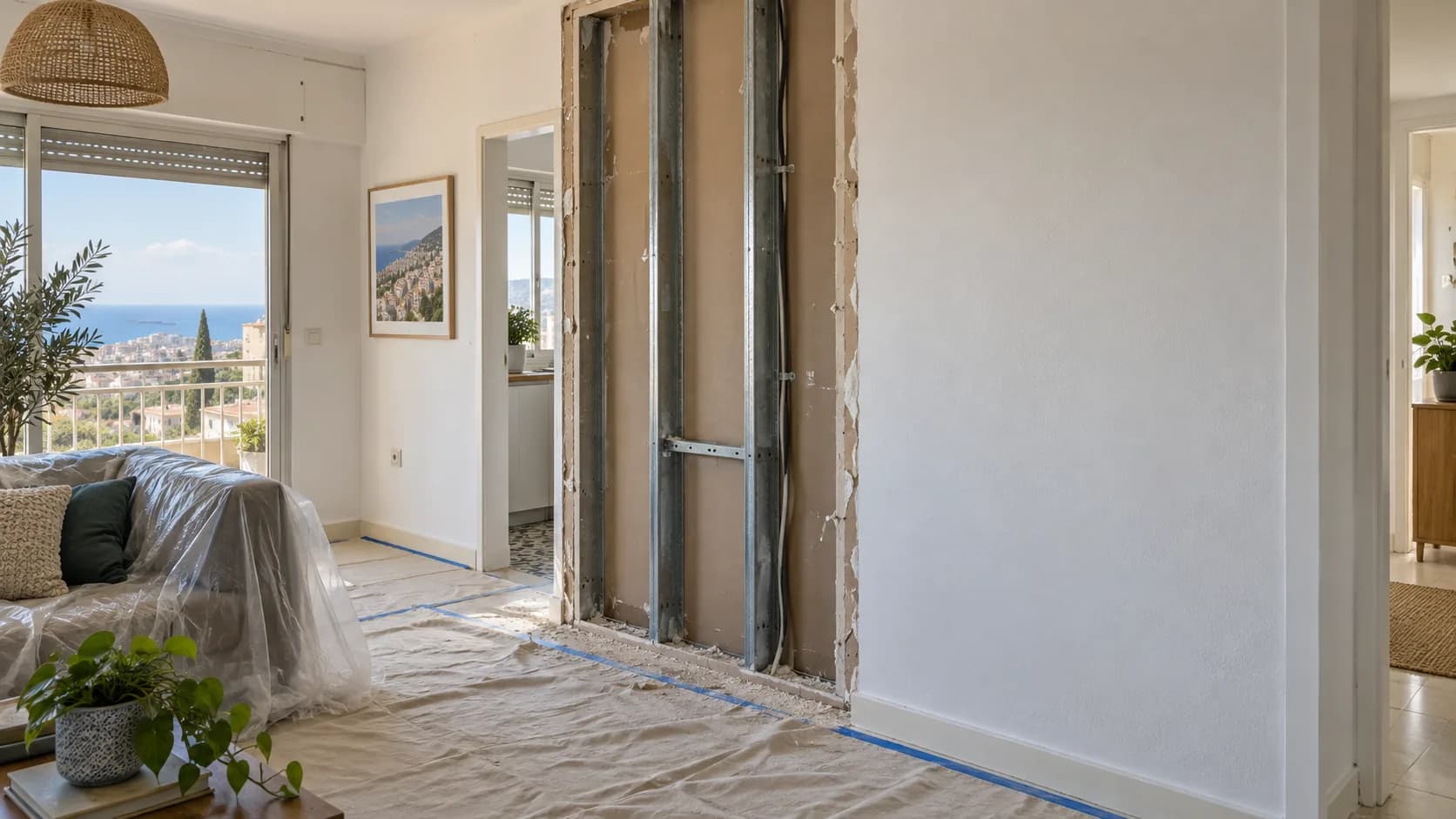
An old partition can look sound under a fresh coat of paint while hiding loose framing, damp board or an unsuitable door opening. Equally, a single dent does not justify rebuilding the whole wall. This guide helps a Haifa homeowner separate a cosmetic repair from a structural problem within a non-load-bearing drywall assembly, compare two complete quotes and keep concealed services safe.
1. Identify the wall before touching it
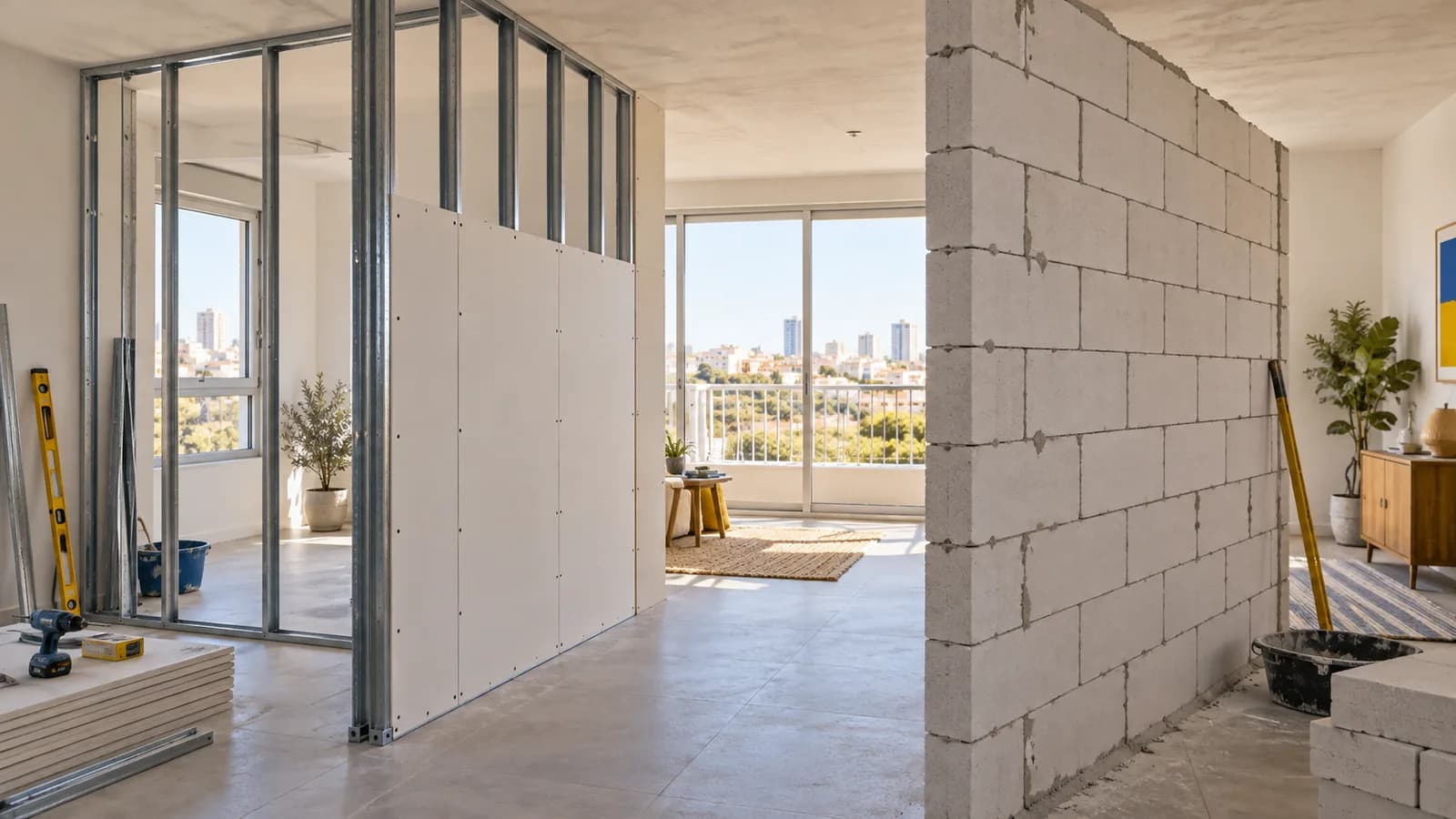
Confirm that this is a non-load-bearing drywall partition, not blockwork or a structural element. A plan, the door edge and an inspection opening may help, but a photograph cannot establish its role. Mark outlets, AC routes, plumbing, doors and mounted furniture. Relevant qualified trades must isolate or move live services before demolition. Record the current room dimensions so that any replacement has a clear reference.
2. Separate symptoms from causes
A dent, small hole or isolated joint mark may be repairable when the board and frame are dry and stable. A recurring crack at the door, moving sheet, bulge or soft patch needs investigation before another layer of filler. Photograph the whole wall and each defect in ordinary light. Note when the problem appeared and whether closing the door makes it worse; this can justify a small diagnostic opening rather than immediate full removal.
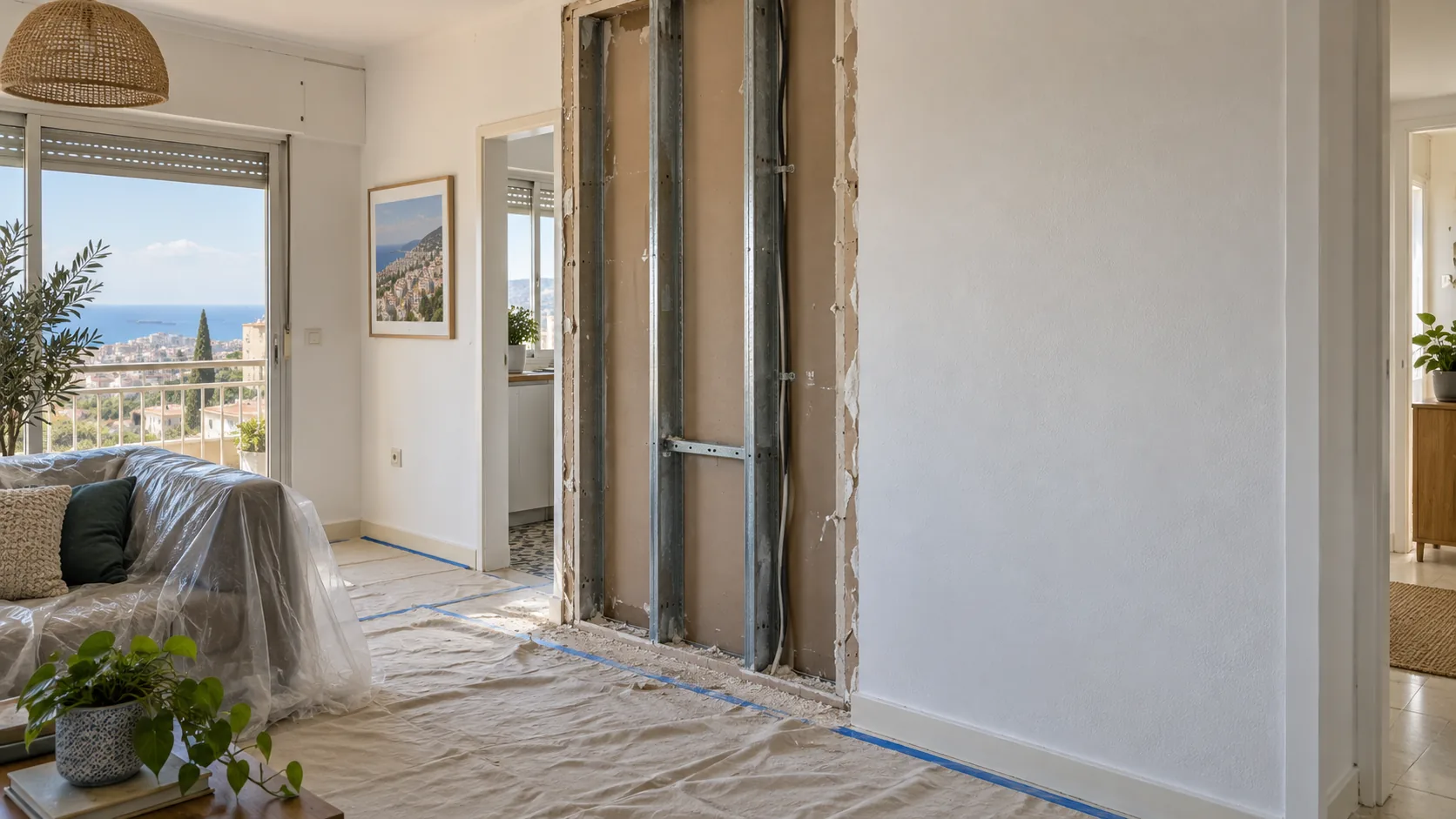
3. Treat moisture as a separate decision
A stain should not be painted over until the source of water is resolved and the cavity is checked. Look for softened facing paper, odour, rusted fasteners and damaged fill. The Gypsum Association guidance explains why water-exposed board may require replacement. The extent is decided on site after the source is fixed; a stain alone neither proves every board is ruined nor makes the cavity safe to close.
4. Inspect the door and planned loads
Doors repeatedly load the opening. Check whether the frame moves, the leaf closes freely and cracks start at its upper corners. Sometimes only the opening requires reconstruction. Also map future cabinets, television or shelves before the board is closed. Backing and fixings must suit the actual load and assembly. A generic hollow-wall anchor cannot replace a plan for heavy items.
5. Know when a local repair is enough
For a sound frame and limited damage, the work may involve cutting out loose material, installing a supported patch, restoring joints, priming and painting. Ask whether paint covers the patch or the whole visible wall: an isolated repair can differ in texture and colour from aged paint. Drywall wall repair in Haifa should specify protection, drying stages, finish and cleanup, not only the size of the hole.
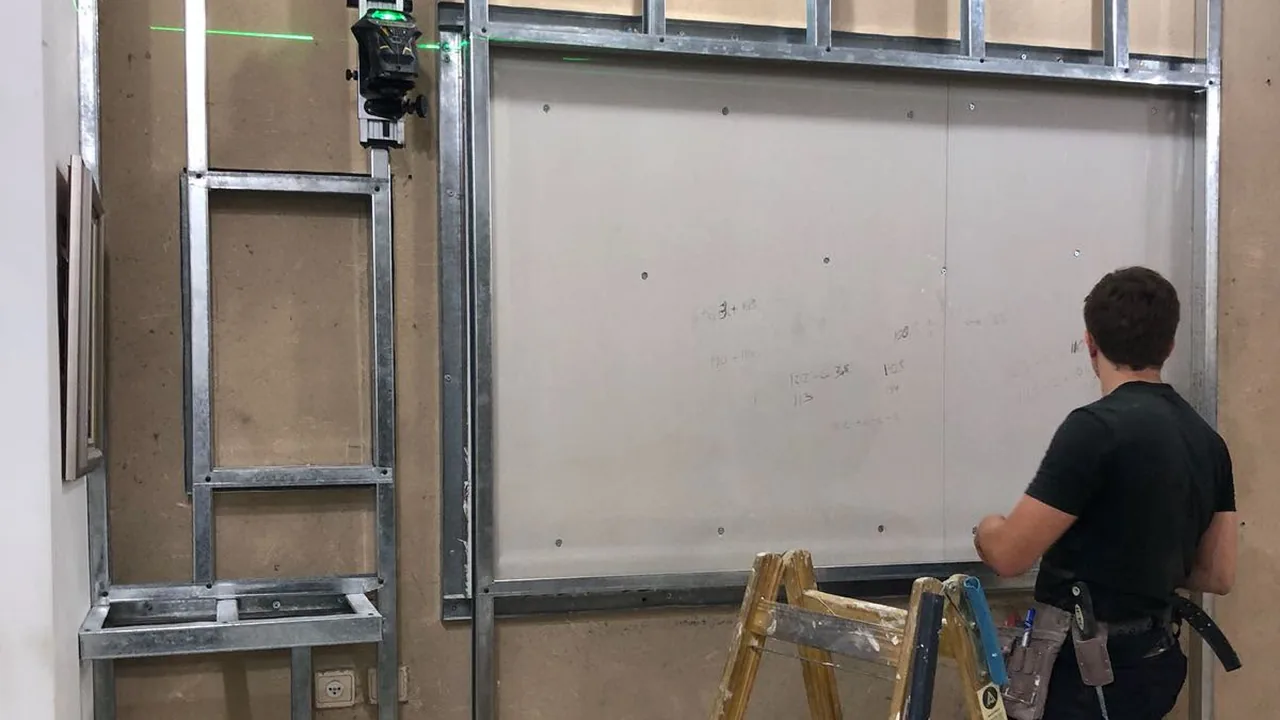
6. Know when rebuilding is more sensible
A distorted frame, widespread damage, a new layout or many earlier alterations can turn a series of patches into an expensive compromise. A demolition and rebuild quote should cover removal, inspection of exposed framing, the new door position, backing, board, joints, paint and disposal. Hidden defects uncovered during opening should be photographed and priced before extra work proceeds. The removal price alone is not the price of a finished room.
7. Do not confuse appearance with acoustic performance
If the complaint is speech between rooms, filling one crack may not solve sound passing through the door, ceiling void, outlets or perimeter. Define the goal first: speech privacy, less television noise or eliminating a rattle. A purpose-built acoustic partition considers framing, layers, fill and junctions together. Avoid promises of total silence without assessing the rest of the path.
8. Compare like-for-like estimates
Request option A for a bounded repair and option B for removal and a finished replacement. Both should state room protection, concealed services, door work, adjoining finishes, debris and who handles other trades. If the inside of an older wall cannot be assessed beforehand, agree how findings will be documented and approved. A photo estimate is a starting scope, not proof of the condition behind the board.
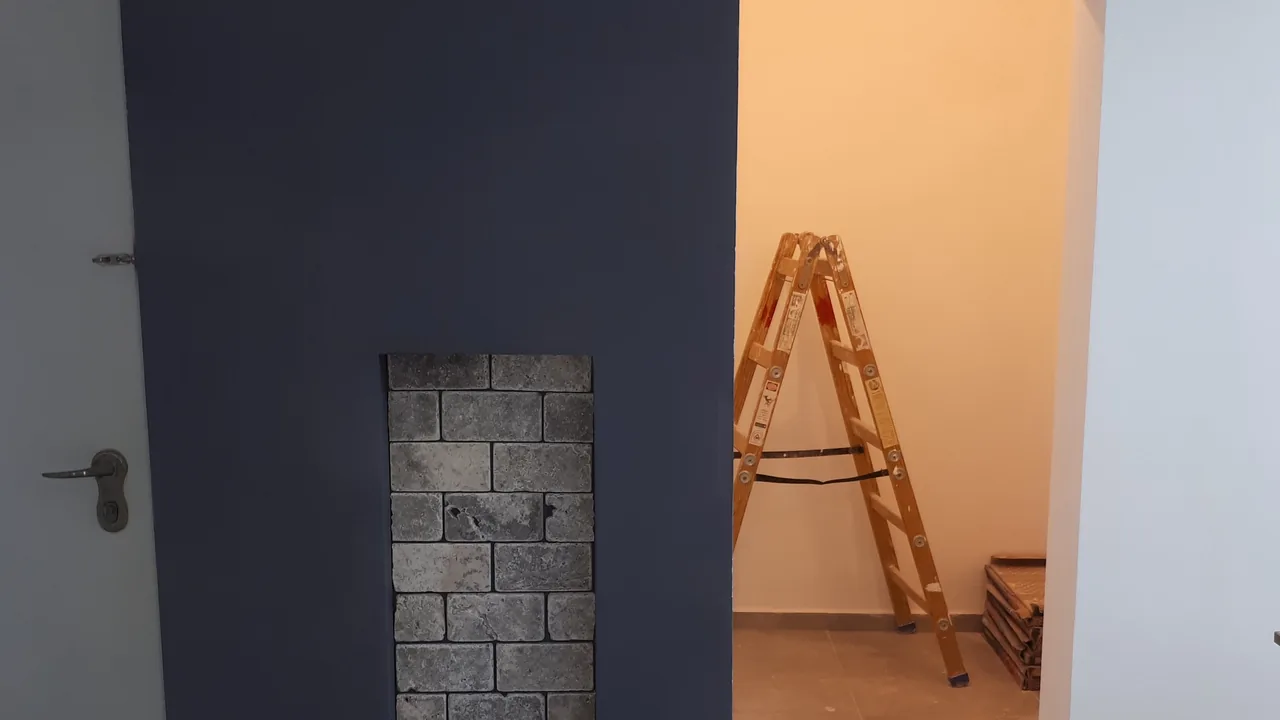
9. Check the concealed and finished stages
Before closure, photograph framing, backing and service routes. At handover, test the door, inspect junctions and paint in normal room light, and check the transition where old and new finishes meet. Keep a map of safe future fixing zones. Ask who will adjust a separately installed door and how finish defects discovered after drying will be handled under the agreement.
10. Send useful information for a quote
Send the Haifa neighbourhood, wall length and height, photos from both sides, a close-up of the opening, any water history and the items you plan to mount. Mention whether the layout changes and when the room must be usable. Nikolai can assess drywall construction and finishing; electrical, plumbing and structural questions require the appropriate specialists when those systems are affected.
Questions
Does every old partition need replacement?
No. A dry, stable wall with limited defects may be repaired.
Can I fill a crack beside a door?
Check the opening first; filler will not stabilise moving framing.
When can I know the final price?
After inspection and, for hidden damage, an agreed opening and revised scope.
Can I demolish it from a photo?
No. Confirm the wall role and concealed services on site.
Must the whole wall be painted?
Sometimes, because a local patch may show against older paint.
Relevant services
Guides and practical notes

Message Nikolai on WhatsApp with photos and dimensions, or call him to discuss the next step and what is needed for an estimate.