
Noisy waste pipe in the Krayot: will an acoustic drywall box help?
Diagnose pipe noise, vibration and leaks before planning a drywall enclosure with proper inspection access and a clear quote.
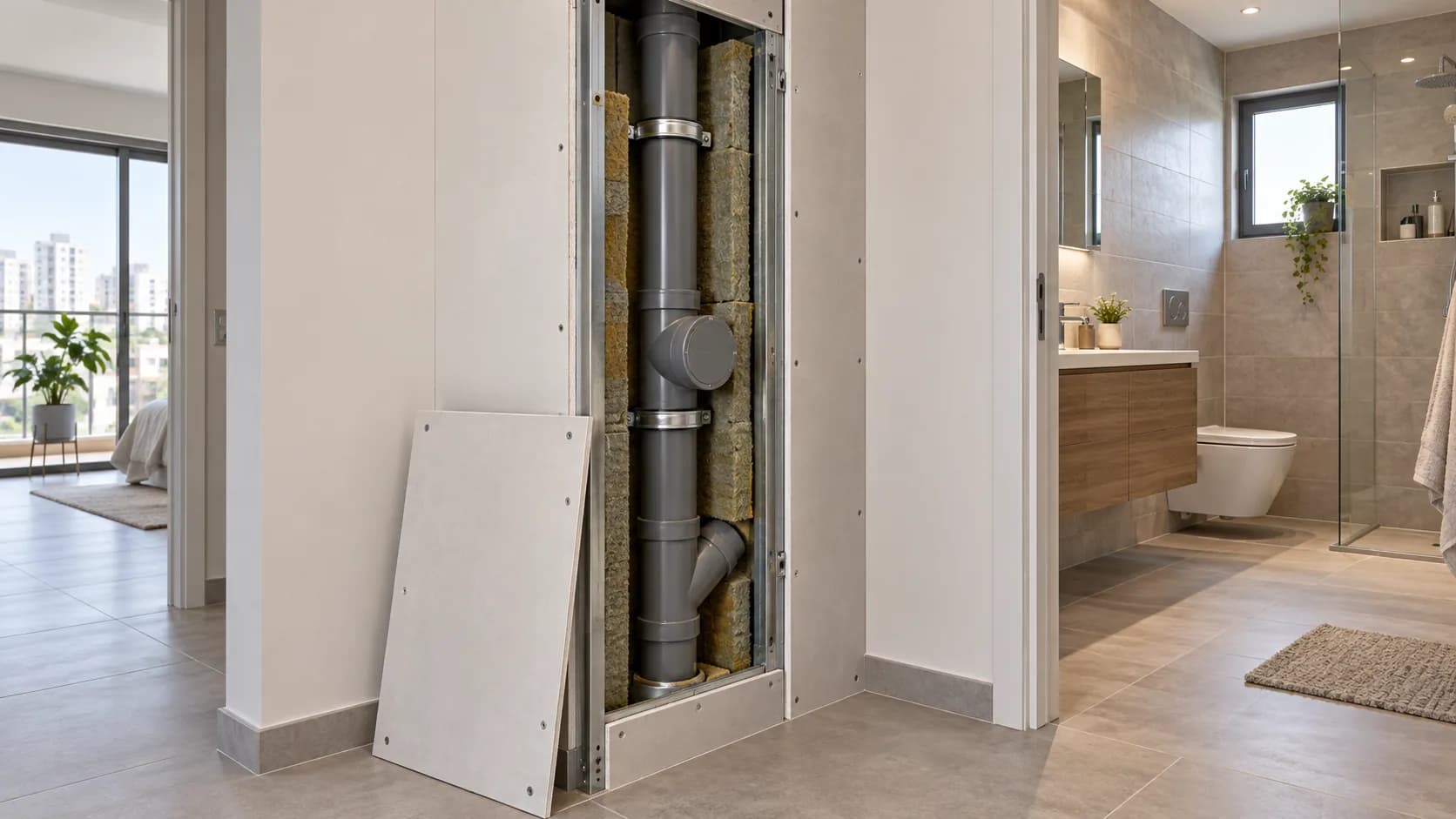
A shared waste riser is often most noticeable at night. Yet covering it does not automatically fix the noise: a loose fixing, contact with a wall or a service opening can dominate. This guide concerns the building enclosure, not plumbing repair. If there is moisture, a smell or suspected pipe damage, a qualified plumbing specialist should investigate first.
1. Describe the sound before ordering work
Note when the sound occurs, where it is strongest and whether it follows a neighbour's flush or other equipment. A short water rush, low hum and sharp impact point to different checks. Record a short clip and photograph the full shaft. If new dampness accompanies the noise, stop treating it as a purely acoustic issue. Access to shared services may need building management coordination.
2. Airborne noise and vibration are different
Sound can pass through a thin enclosure or gaps around it. Vibration can travel through rigid pipe fixings into walls and slabs. Better board layers and cavity treatment may reduce some airborne noise, but they will not repair a pipe striking a clamp. Ask the plumbing specialist to identify contacts and faults. Avoid a promise of complete silence based only on a material name.
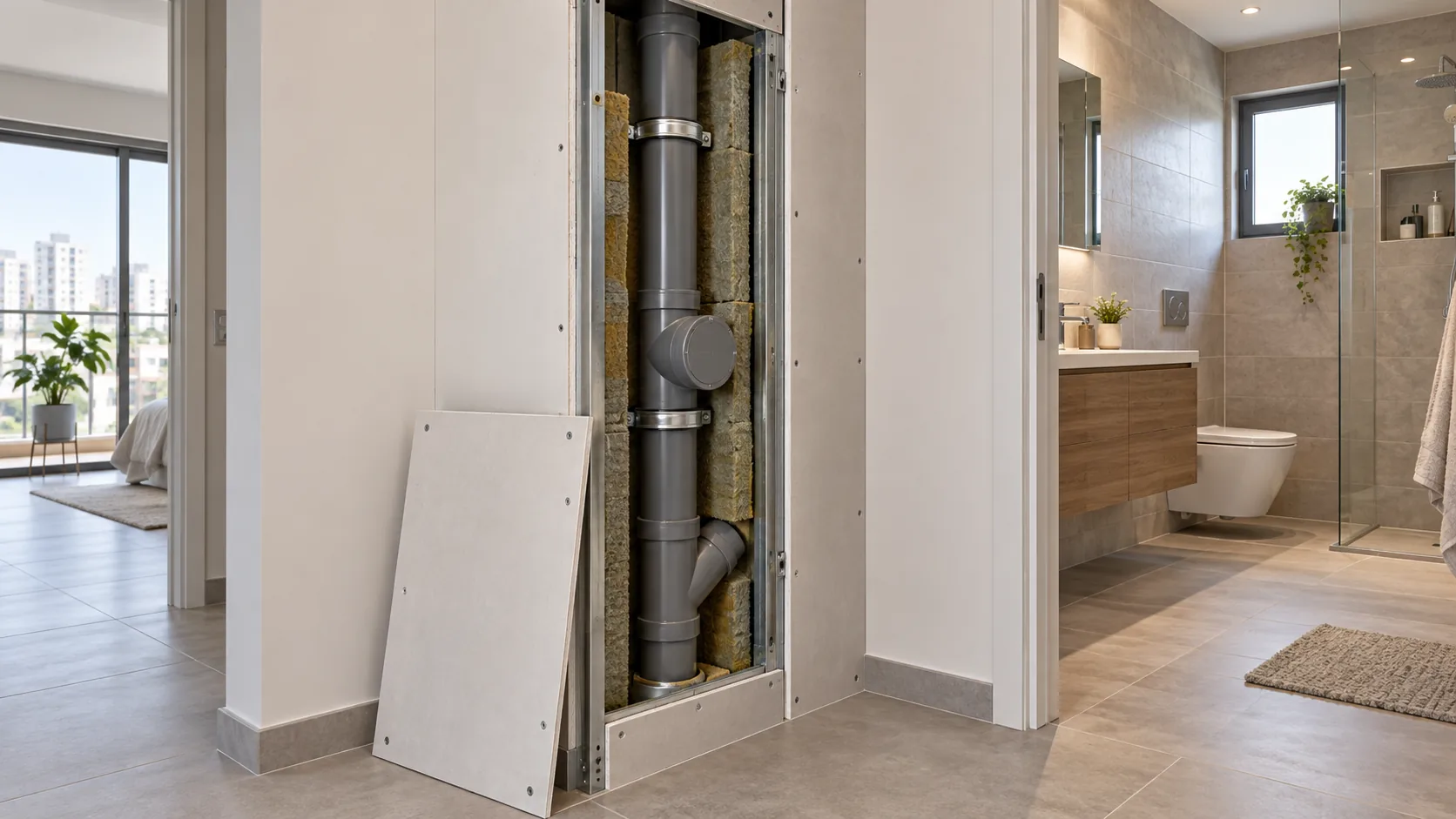
3. Measure the usable space
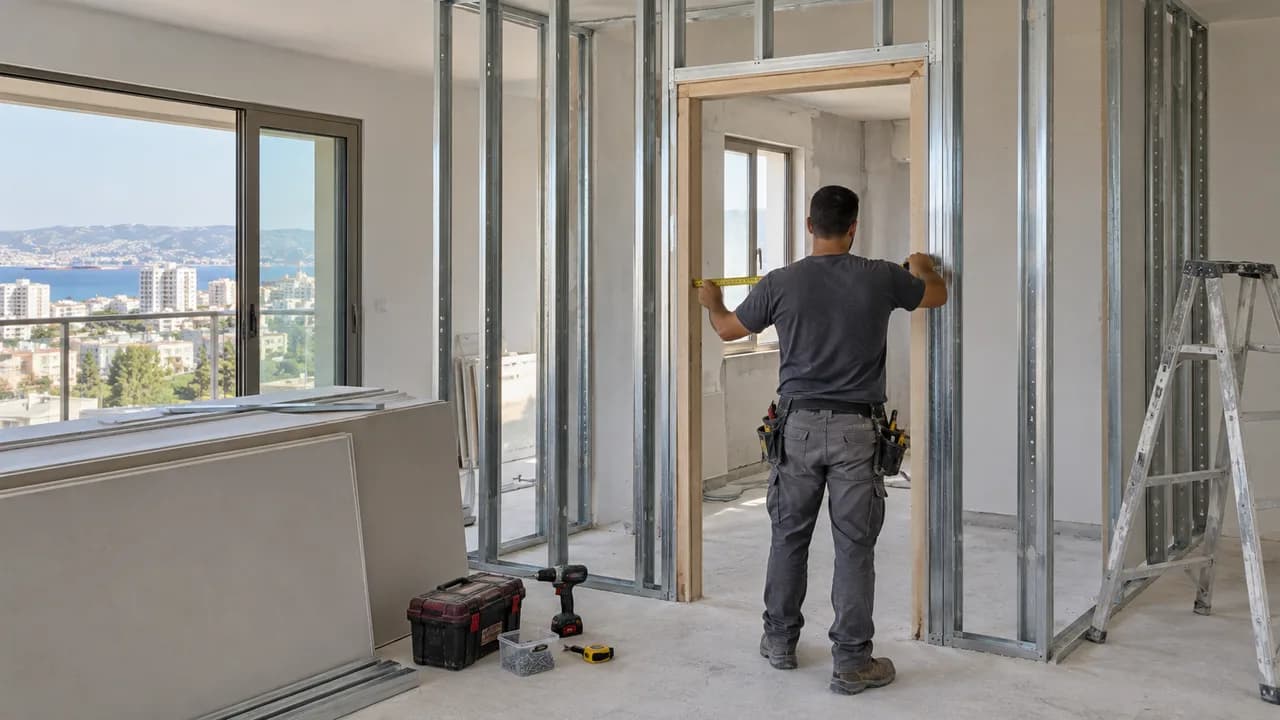
Record pipe bends, branches, valves and the clearance to the door and fittings. Draw the finished outside dimensions, including board and final coating, rather than only a bare frame. Krayot apartments have varied layouts; the address says nothing about the position of a service branch. Photos from floor to ceiling help determine whether a straight box is possible.
4. Plan real inspection access
A service shaft box in the Krayot must leave valves and inspection points reachable. A tiny opening that shows the part but does not admit a tool is inadequate. Decide hatch dimensions, opening direction and finish before boarding. Photograph the hidden layout. The access panel guide has a useful checklist.
5. Design the whole enclosure
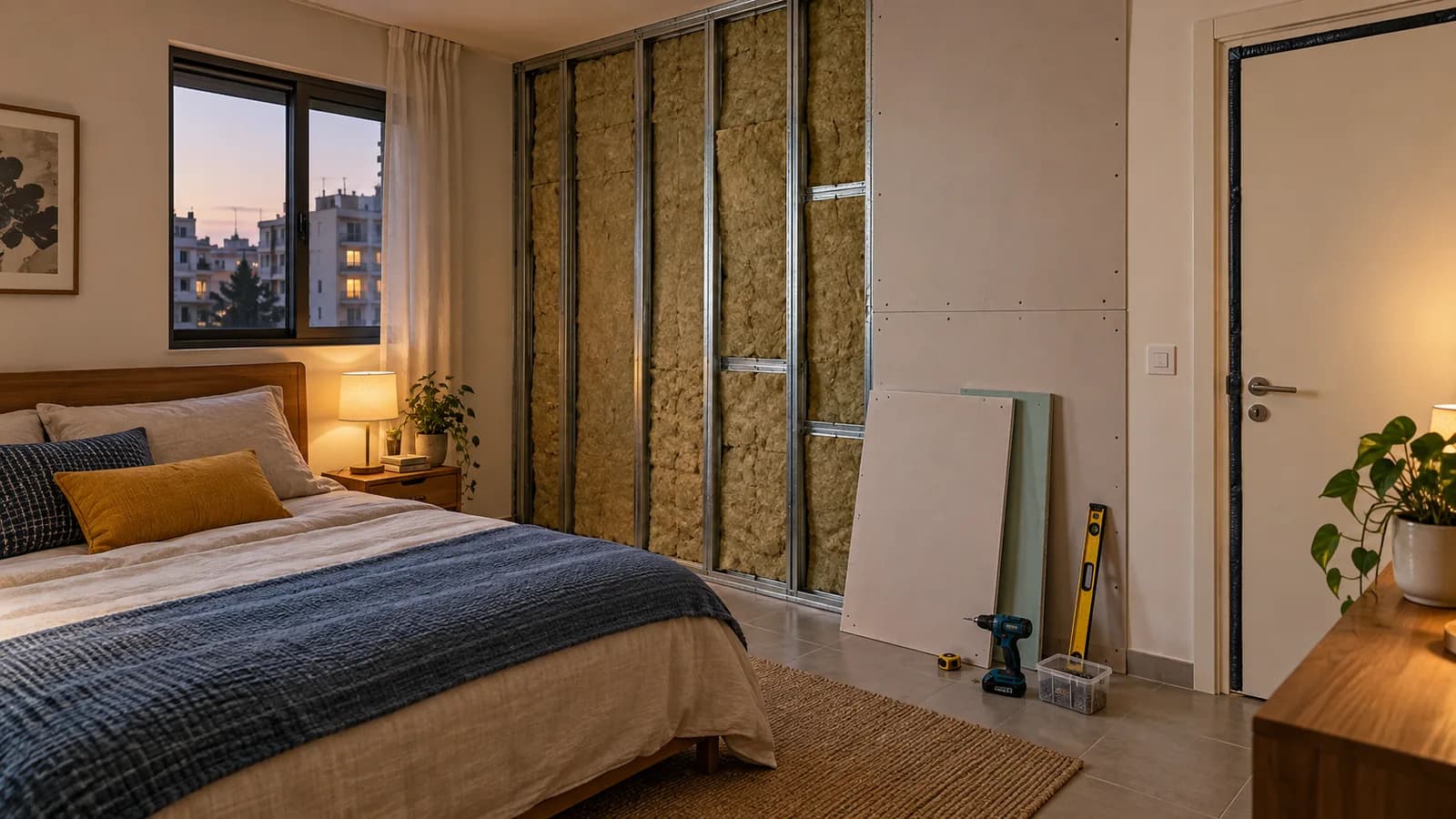
Discuss a stable frame, appropriate board for the room, cavity treatment, sealed edges and a hatch that does not rattle. One standard sheet is not a complete acoustic design. Do not pack insulation hard against a pipe without checking service, fire and maintenance requirements. The construction must be coordinated with the responsible plumbing specialist where shared infrastructure is involved.
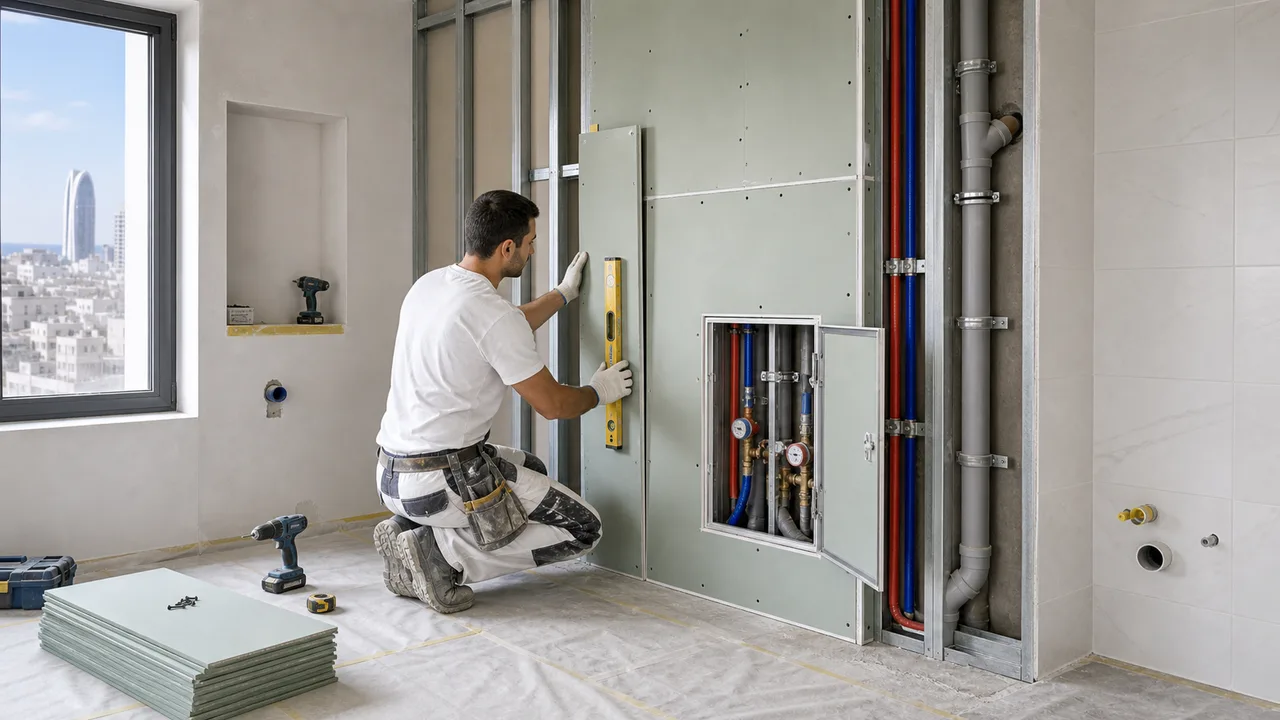
6. Moisture changes the detail
A moisture-resistant board is selected as part of a suitable system; it cannot stop a leak. Check old stains and make sure the base is dry and serviceable. A painted box and a tiled box need different allowances and trades. NikoGips does not advertise tile installation, so coordinate the exact final dimensions with the tiler if a tile finish is planned.
7. Make the quote legible
Separate removal of the old box, protection, frame, boards, any acoustic fill, the hatch, joints, primer, finish and waste. State what happens if opening the old enclosure reveals pipe damage and who calls the plumber. Length alone does not price a shaft with awkward access and multiple hatches. Compare the usable completed result, not only the frame material.
8. Know when a box will not solve it
If the dominant sound passes through a slab or adjacent wall, treating only the pipe zone can have limited effect. A loose fixing needs source repair. A fault in building equipment belongs to its specialist. A small diagnostic visit and a written problem statement may save the cost of the wrong treatment. See the soundproofing diagnosis guide for other noise paths.
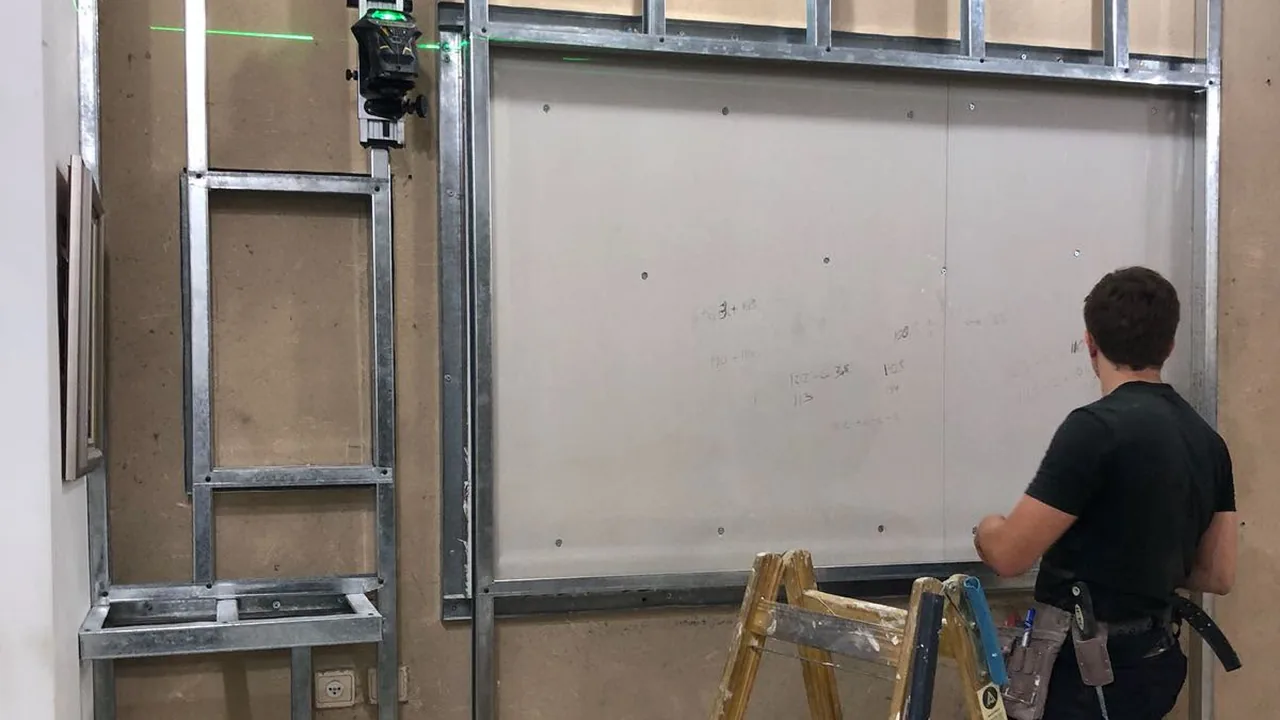
9. Test access and finish after installation
Open every hatch and confirm the intended component can actually be serviced. Check edges, paint and hatch rattle. Compare noise under similar conditions where possible, while recognising that casual listening is not a formal acoustic measurement. Retain photos of the hidden pipe routes and the identity of the trade responsible for future plumbing issues.
10. What to send Nikolai
Send your Krayot location, a short recording, whole-shaft photographs, close views of branches and existing hatches, approximate dimensions and the requested finish. Include the plumber's findings if the pipe has been checked. Once its condition is understood, Nikolai can assess the enclosure, access details and building quote without disguising a service fault behind a new wall.
Questions
Will any drywall box stop the sound?
No. First identify the source and path, then specify the whole assembly.
Can the inspection point be covered?
It must remain accessible.
Who repairs the pipe?
A plumbing specialist; NikoGips handles agreed construction work.
Does moisture-resistant board cure a leak?
No, the source of moisture must be fixed first.
What sets the cost?
Size, access panels, existing finish, cavity work and final decoration.
Relevant services
Guides and practical notes
Message Nikolai on WhatsApp with photos and dimensions, or call him to discuss the next step and what is needed for an estimate.