
Window reveals in Netanya: repair damaged edges or rebuild them with drywall?
A practical guide to window reveals after replacement: damp, cracks, frame clearance, drywall versus plaster, measured lengths and quote checks.
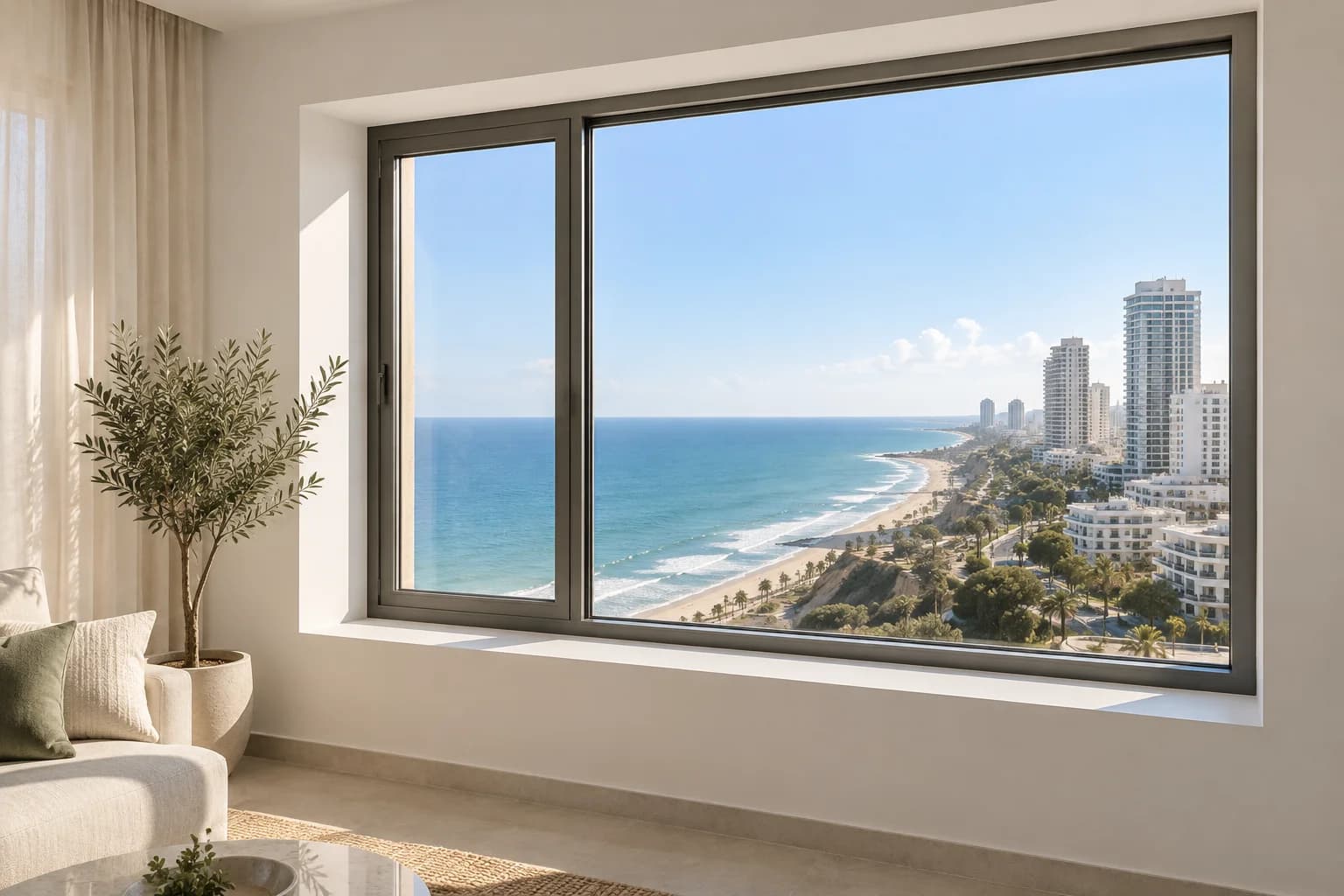
A replacement window can be perfectly functional while the surrounding opening looks unfinished. Broken corners, deep gaps and uneven surfaces are visible in strong daylight, and a coat of paint rarely resolves the underlying detail. In a Netanya apartment, the right repair depends on the substrate, the window installation and whether moisture is still present. This guide explains what to check before deciding between a local repair, plaster rebuilding and a drywall reveal.
1. Separate the window installation from the interior finish
First identify what has actually changed: the frame, sill, shutters, outer sealing or only the interior finish. The window installer and finishing contractor need a clear boundary of responsibility. Interior drywall cannot correct a moving frame or a leak at an exterior junction. Photograph the opening from the room and show each damaged edge. Record whether the sash opens and closes normally before the finishing work begins. A handover note protects both parties from confusing an existing window issue with damage caused during the later repair. Avoid treating every gap around a new frame as an ordinary filler problem.
2. Check stains and recurring cracks before covering them
A stain after rain, a soft corner or paint that repeatedly peels deserves investigation. Coastal location alone does not diagnose the cause: rain entry, condensation, installation details and ventilation conditions need different responses. Explain when the mark appears and whether it spreads. The source must be addressed before rebuilding affected finishes. Drywall intended for humid conditions is not a waterproof repair for a leaking window. If the background remains wet or unstable, agree to postpone closure and assess damaged material. Do not ask the decorator to hide a defect so that the opening looks complete for a photograph.
3. Measure the opening and the operating clearances
Measure width and height at more than one position, reveal depth and the distances to frame edges, handles and shutter components. Mark the final surface line so that the sash, insect screen and access covers can still work. Check the top corners as well as the sides: openings are not always square. A thick repair may create a neat surface but reduce usable clearance. Record the sill junction and curtain position too. The quote should identify exactly which faces are being restored, with a drawing where necessary, instead of promising a complete window repair while leaving the customer to assume what that means.
4. Choose local patching, plaster or drywall for a reason
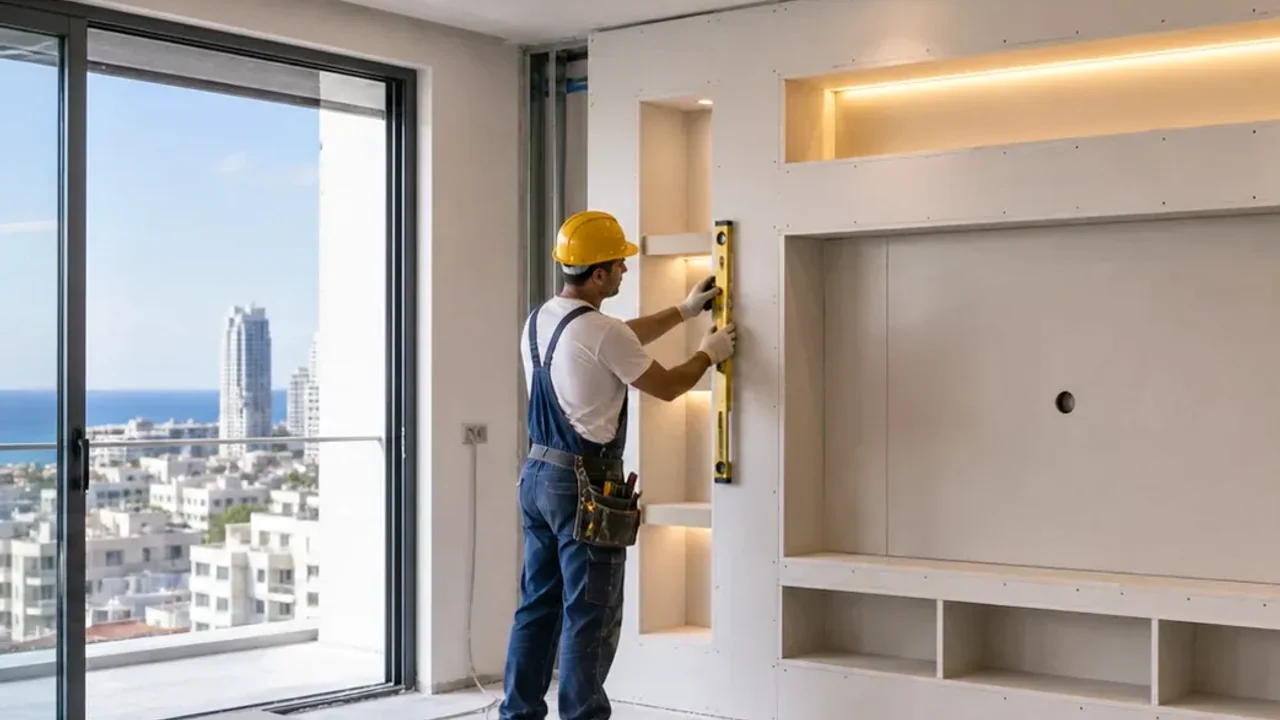
A small damaged corner on a dry stable background may need a local repair. Deep irregular surfaces may justify rebuilding, while a planned drywall lining can create a consistent plane across the reveal. The best choice depends on depth, fixing background, moisture conditions and the adjoining wall. Do not use drywall solely because it hides a difficult substrate quickly. Its support and edge treatment still need a proper detail. Nikolai's drywall openings and reveals in Netanya is the relevant service for this construction; the window itself remains a separate trade's responsibility.
5. Plan the frame junction and the exposed corners
The junction against the frame and the external corner perform different jobs. Agree suitable materials and an edge detail for the actual background, frame and movement conditions. A rigid patch pressed indiscriminately against everything can crack again. Corner reinforcement must sit straight and remain covered by the intended finish; a heavy lump of filler is not a substitute for setting out the opening. Discuss whether the adjoining wall will be patched locally or refinished to a natural boundary. This prevents a crisp new reveal being surrounded by obvious repair halos in daylight. Check the proposed junction before the finishing layers conceal it.
6. Keep maintenance points accessible
Shutter inspection covers, drainage features and removable window components must retain their function. Ask the window specialist which areas cannot be covered or sealed. A finishing contractor should not alter frame drainage to improve appearance. If curtain supports will be installed nearby, define their fixing background before rebuilding the opening. Photograph any hidden reinforcement. Avoid hanging a heavy curtain track from an unplanned board edge. Read the hidden curtain pocket planning guide if a wider ceiling and curtain detail is part of the renovation, rather than improvising several unrelated repairs around the window.
7. Estimate reveal work in linear metres
The NikoGips indicative reveal and opening range is ₪204–348 per linear metre. For an assumed window 1.4 metres wide and 1.2 metres high, two sides and the top total 3.8 metres, giving approximately ₪775.2–1,322.4 for that selected price item. A bottom reveal, sill work, adjoining wall repair or exceptional depth can change the scope. The calculation is not a fixed price for replacing a window. Confirm the current calculator, the measured faces and whether support, corner treatment, preparation and paint are included. Minimum job costs, access and taxes should be stated in the quotation.
8. Schedule window and finish trades in the right order
Complete the agreed window installation and relevant water-entry investigation before the interior finish closes the junction. Protect the glass, frame, floor and furniture; sanding dust can reach more than the immediate opening. Allow each repair and coating to dry according to its product instructions and site conditions. Do not promise an occupied room can be restored instantly because the visible area is small. In a Netanya apartment building, verify the actual parking, lift and delivery rules, especially if several openings are being repaired. Grouping work can be practical, but it should not hide a different defect at one window.
9. Decide where the paint repair ends
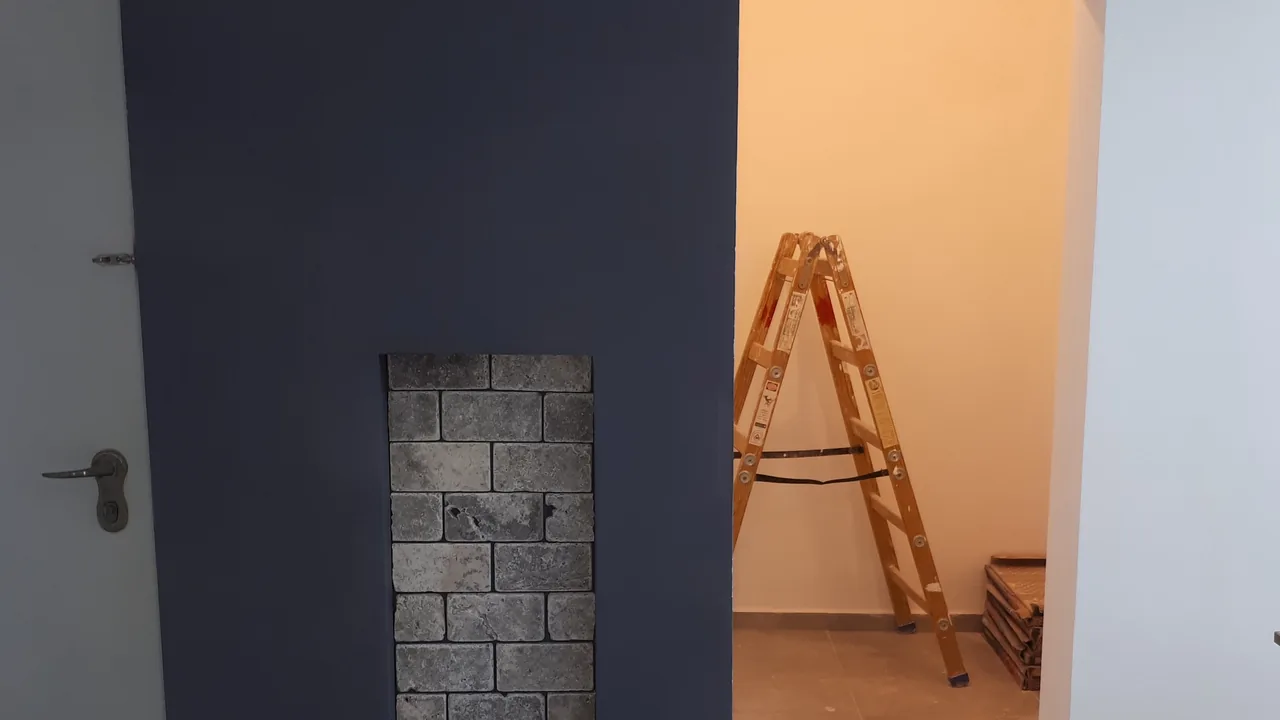
A new patch may differ from aged paint even when the original colour code is available. Agree whether only the reveal, its adjacent wall or the whole wall face will be painted. Take a sample in the actual daylight rather than judging colour from a phone photograph. The preparation and primer depend on the repaired substrate and selected coating. A local repair can be appropriate, but an invisible colour match should not be assumed. For a broader finish problem, the wall preparation service in Netanya addresses a different area and should appear as a separate quote item.
10. Inspect appearance and function together
At handover, look along the corners, compare the reveal planes and inspect the surface under ordinary daylight. Then open the window, test the agreed access covers and confirm that handles, screens and curtains remain clear. Ask the responsible installer about drainage or operating concerns; these are not settled by a smooth painted edge. Record unfinished work and keep photographs of the final junction. Recheck any previously stained area after the relevant weather conditions. If moisture returns, investigate the source rather than repainting repeatedly. A useful acceptance check covers both a neat opening and the working window around which it was built.
11. Prepare photographs that make the quote meaningful
Send the Netanya neighbourhood, number of windows, each opening's size and depth, photographs of the complete wall and close details of damage. Add the installation date if known, whether stains follow rain and which frame components need access. Say whether furniture can move and whether repainting the adjacent wall is acceptable. The photo and measurement checklist can help. An initial remote estimate should clearly identify assumptions; an inspection may still be needed to choose a buildable repair and assign responsibility for a hidden defect.
Questions
Can drywall stop a window leak?
No. The water-entry cause must be addressed before repairing interior finishes.
Is the whole window perimeter priced automatically?
No. Agree which faces and lengths are included, including any bottom reveal or sill work.
Can the frame be covered to hide a gap?
Only an agreed detail that preserves operation, drainage and access is appropriate.
Will a small paint patch disappear completely?
Colour age, sheen and daylight can reveal a patch; decide the painting boundary beforehand.
Should every damaged reveal be rebuilt?
No. A dry stable local defect may only require a local repair.
Relevant services
Guides and practical notes

Message Nikolai on WhatsApp with photos and dimensions, or call him to discuss the next step and what is needed for an estimate.