
Acoustics in a rented room in Pardes Hanna: improvements you can remove when moving
Improve speech and video calls with a planned layout, removable absorbers and clear landlord handovers, while distinguishing echo from neighbour noise.
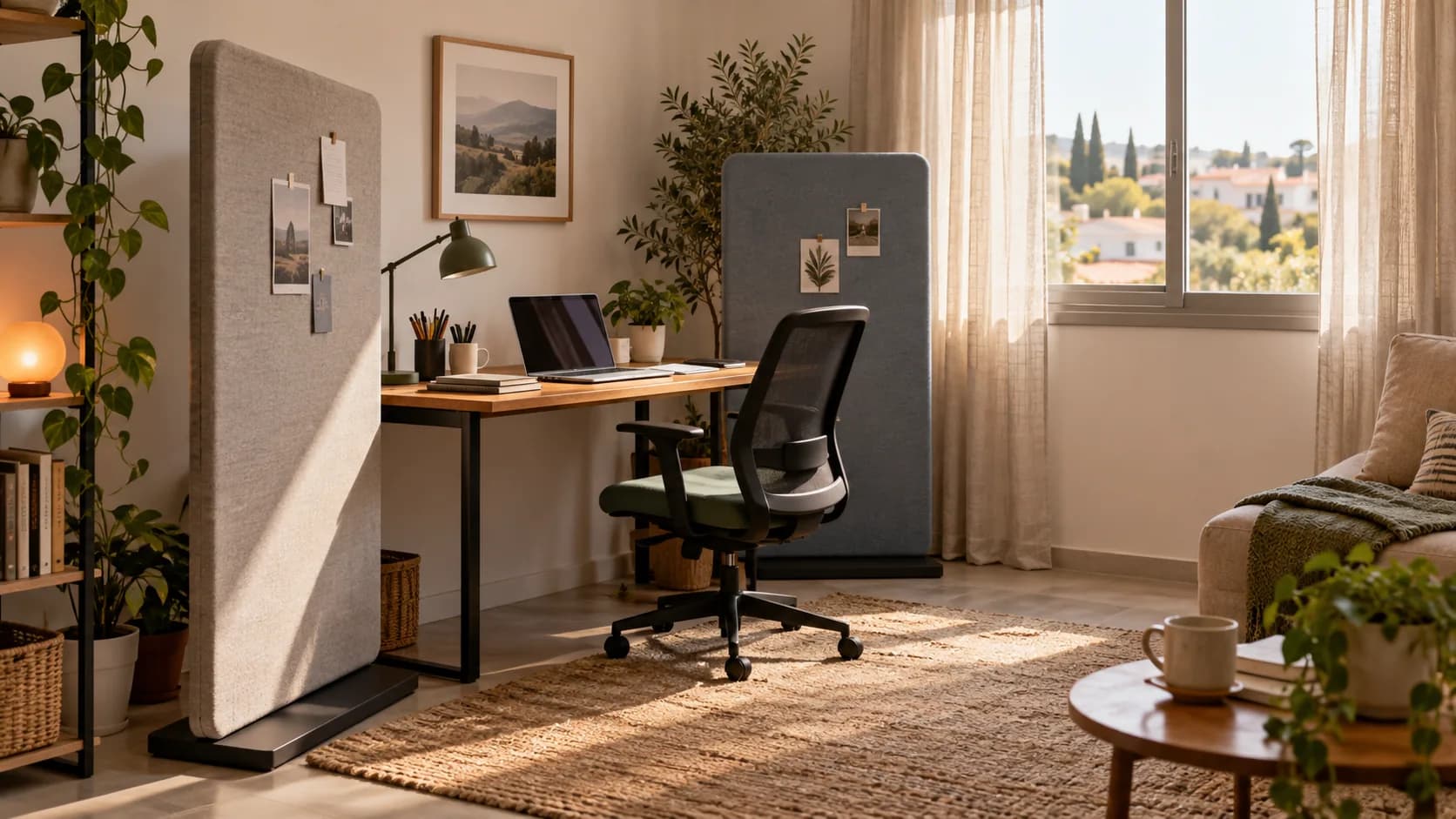
A rented room may make speech sound harsh and video calls echo even when it is otherwise quiet. Building a new wall or ceiling is not always practical in someone else's property. Start with the problem, the length of your tenancy and changes the owner accepts. This guide compares furniture, removable panels and agreed construction work without treating a soft rug as a cure for noise from the next apartment.
1. Identify the complaint
Separate echo from your own speech, street noise and speech entering from another room. If your voice sounds reverberant in quiet conditions, investigate absorption. External noise requires tracing the window, door, wall or ceiling path. A normal call recording can describe the problem but is not a professional measurement. Check microphone placement and loudspeaker settings before assuming the room needs construction.
2. Understand what a panel does
An absorber reduces some reflections inside the space. Transmission between neighbours depends on the separating assembly and openings. ROCKWOOL explains this distinction. If a decorative panel package promises complete isolation, ask for the assembly and test method. For outside sound, begin with the neighbour-noise diagnosis guide before committing the tenancy budget to the wrong surface.
3. Test the normal furnished room
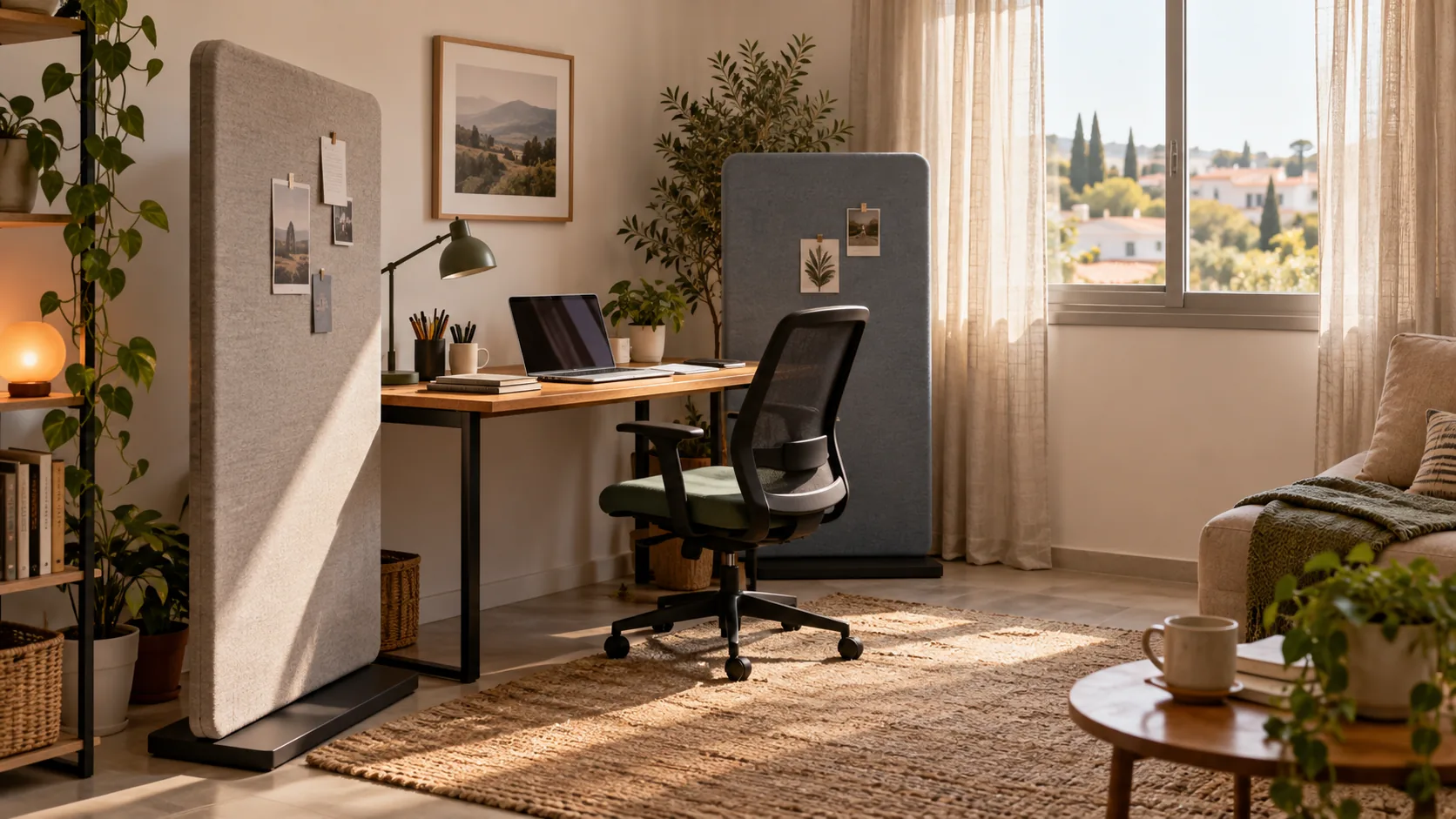
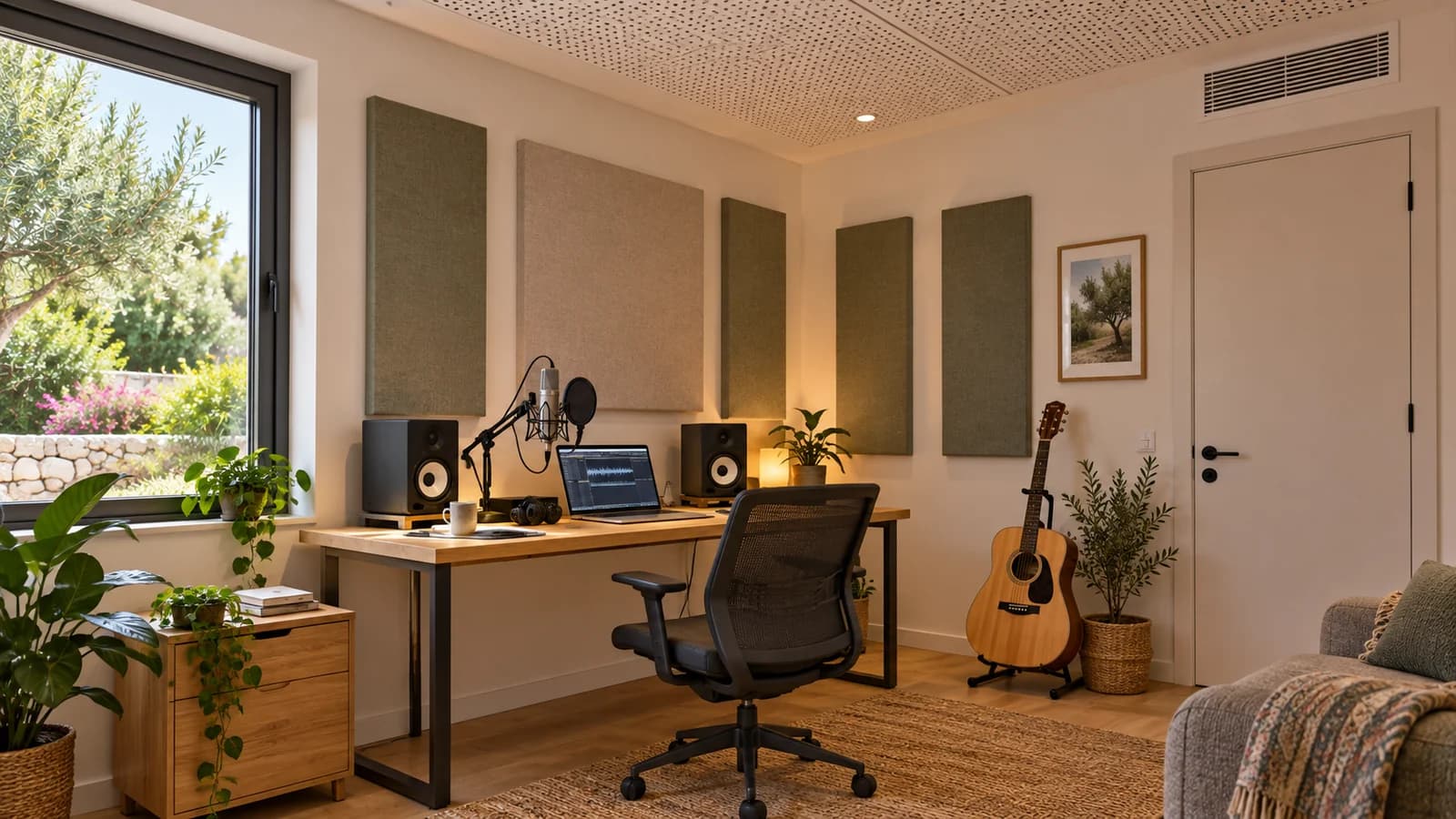
An empty room with hard flooring and bare walls sounds different from a furnished one. Check after placing the desk, chair, rug and curtains, keeping the same microphone position and speaking level. Furnishings do not guarantee a target, but show what remains under daily conditions. Avoid filling the room with objects at the expense of access and daylight. A different desk orientation may also reduce a strong nearby reflection.
4. Plan removal as well as installation
A freestanding panel can move with you but needs a stable base and a safe location away from door swings. A wall panel leaves fixings to restore. Map the movement route and dismantling method before buying. Adhesive or tape is not a universal solution for heavy products and may remove old paint. Use the manufacturer's approved fixing method rather than relying on a no-drilling label.
5. Agree changes with the owner
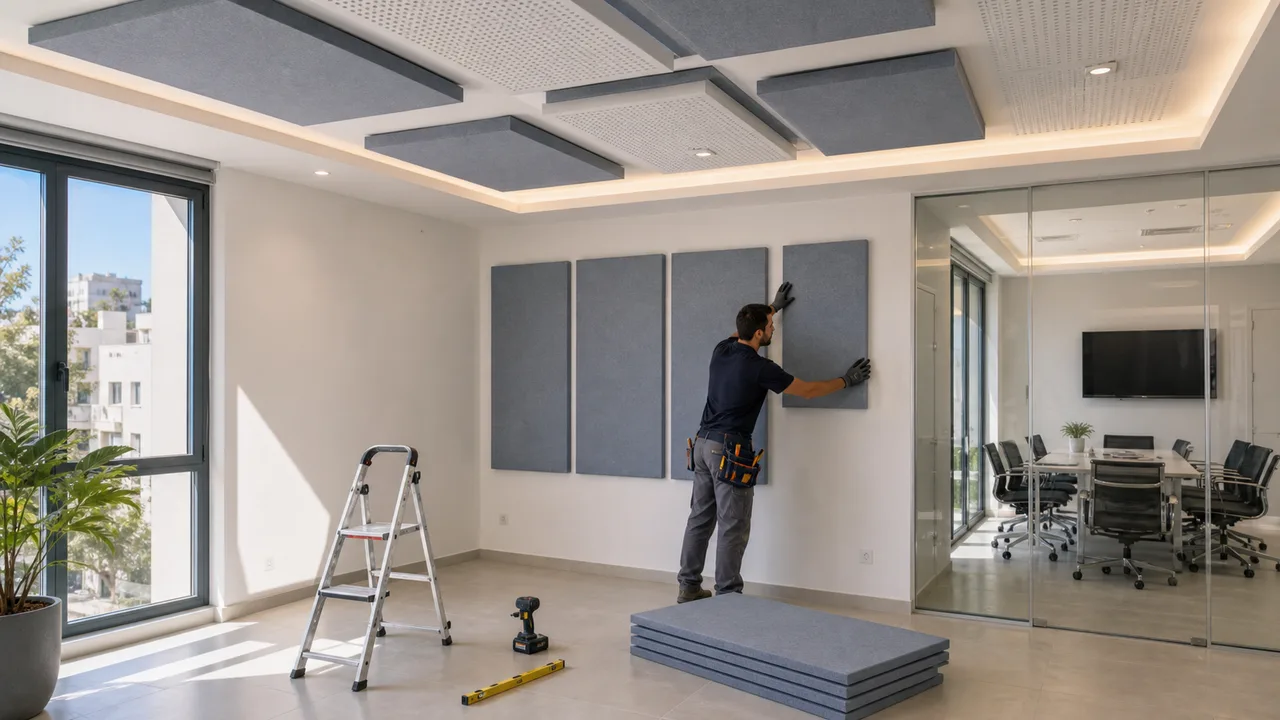
Discuss allowed holes, colour, altered areas and the required condition at return. Keep starting photographs and a written scope. Actual obligations depend on your tenancy agreement and arrangements with the owner. A new partition or ceiling is a larger change than a movable screen and must be agreed before design. A short tenancy may make expensive permanent work poor value even if it is technically possible.
6. Place absorption around the use case
One call workstation does not necessarily need every surface covered. Review large reflecting areas near the speaker and microphone, then choose targeted zones. Test with the normal furniture. Music recording or low-frequency hum requires a different level of assessment from conversation; a thin panel cannot be promised to work equally at all frequencies. Echo reduction in Pardes Hanna begins with the room's intended use.
7. Check the finished product
Ask for material characteristics, installation instructions and cleaning limits. The fabric cover does not reveal the internal construction. Use a finished product or a properly specified enclosed assembly rather than exposed fibrous fill as a homemade completed panel. Consider dust, pets, window moisture and transport weight. Being able to remove a cover or move the panel can matter more in a rental than a dramatic showroom appearance.
8. Compare total costs
Compare workstation adjustments, removable absorbers and construction with later reinstatement. Include delivery, fixings, installation, removal and patching holes. One cheap panel price is not the price of a usable room. Quantity, product and wall condition affect labour. For a short tenancy, identify what you retain at move-out. The home-office acoustics guide helps compare options by function.
9. Test comfort under real conditions
Make a normal call and ask the listener whether speech is clearer. Avoid converting a subjective impression into an invented percentage reduction. A numerical acoustic outcome needs an agreed measurement method. Check panel stability, passage and ventilation clearance, and retain fixing photos and removal instructions. The improvement should remain comfortable every day and allow the agreed room condition to be restored.
10. Plan around actual room use
For video calls, the area around the speaker and microphone can matter more than covering every wall equally. Mark the desk, camera position and nearby reflective surfaces. If the room is also a bedroom, keep access to the bed, wardrobe and normal walking routes. A panel stand that has to be moved each morning may be a poor practical choice even if its initial acoustic position is useful.
Compare changing the desk position, using the room's existing furnishings and adding a limited set of suitable panels. Leave room for ordinary living rather than designing around an empty photograph. Soft furnishing close to a microphone does not establish improved insulation from neighbours. External noise remains a separate problem that requires understanding the transmission path before a construction solution can be proposed.
11. Compare changes under the same conditions
Record a short sample of normal speech from the same position before and after the change. Keep microphone placement, settings, distance and door position consistent. Automatic noise suppression can alter a recording more than the room treatment, so two samples made with different settings tell little about the panels. Check an ordinary call as well as the recording, because that is the use you are trying to improve.
This comparison can help select a direction, but it is not a sound insulation measurement or a reliable decibel reduction claim. If the complaint occurs at a particular time or with a particular external source, keep a separate description of those circumstances. A quieter recording made when the neighbour is absent does not demonstrate better isolation. Send the observations along with the room photographs when requesting advice.
12. Include removal and moving costs
A temporary solution should survive moving. Check each panel's weight, packing needs, transport dimensions and method of installation at the next property. For wall fixings, agree the holes and restoration with the owner before work starts. A fixing can be technically secure while still being outside the changes the tenancy allows. Keep both the practical installation details and the owner's agreement available.
Budget for delivery, stable supports, installation and eventual removal. If repainting a full wall will be necessary after taking the panels down, include that in the comparison too. For a Pardes Hanna tenant with an uncertain stay, a removable arrangement may suit a speech problem better than permanent construction. Its value depends on safe everyday use and realistic reuse, rather than being labelled temporary in a sales description.
13. Prepare an enquiry
Send Pardes Hanna location, room dimensions, all-wall photos, desk position and the actual activity: calls, conversation, music or incoming noise. State tenancy length, owner restrictions and whether drilling is permitted. Nikolai can discuss the agreed construction and installation scope; a specialist handles studio assessment when needed. Knowing how the solution comes out is part of planning how it goes in.
Questions
Will panels stop neighbour speech?
Usually they target room reflections; transmission is assessed separately.
Can calls improve without a new ceiling?
Sometimes layout, furnishings and selected absorption are enough.
Is no-drilling always safer?
No. Check stability and the approved fixing method.
Should the owner agree?
Coordinate alterations under your tenancy arrangements.
How is exact improvement established?
A numerical outcome needs a defined acoustic measurement method.
Relevant services
Guides and practical notes

Message Nikolai on WhatsApp with photos and dimensions, or call him to discuss the next step and what is needed for an estimate.