Drywall wall cladding and leveling in Israel
Drywall wall cladding and leveling in Israel: concrete and block walls on framing or suitable substrate, hidden wiring, backing for TV and furniture, optional mineral wool and paint-ready finish without waves.
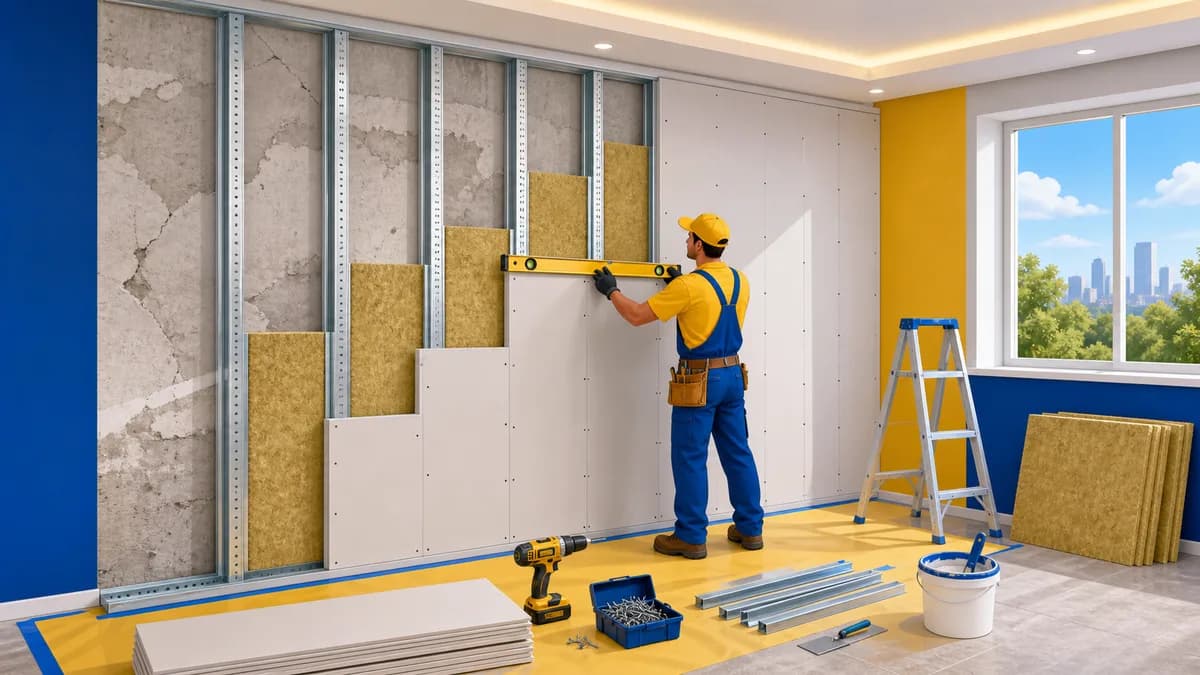
Drywall wall cladding is useful when a concrete or block wall is uneven, wavy, full of exposed cables, old finishes or needs a clean paint-ready plane quickly. The method should be chosen early: framing, adhesive fixing or a mixed approach, because it affects thickness, price, strength and access to services.
When cladding is better than wet leveling
Drywall is practical when the wall is very uneven, wiring has to be hidden, a TV wall is planned, an acoustic layer is useful or a flat plane is needed without thick wet layers. If the wall has only small defects and no services, plaster or skim coat may be simpler, so the method should follow the wall condition.
Framing or adhesive fixing
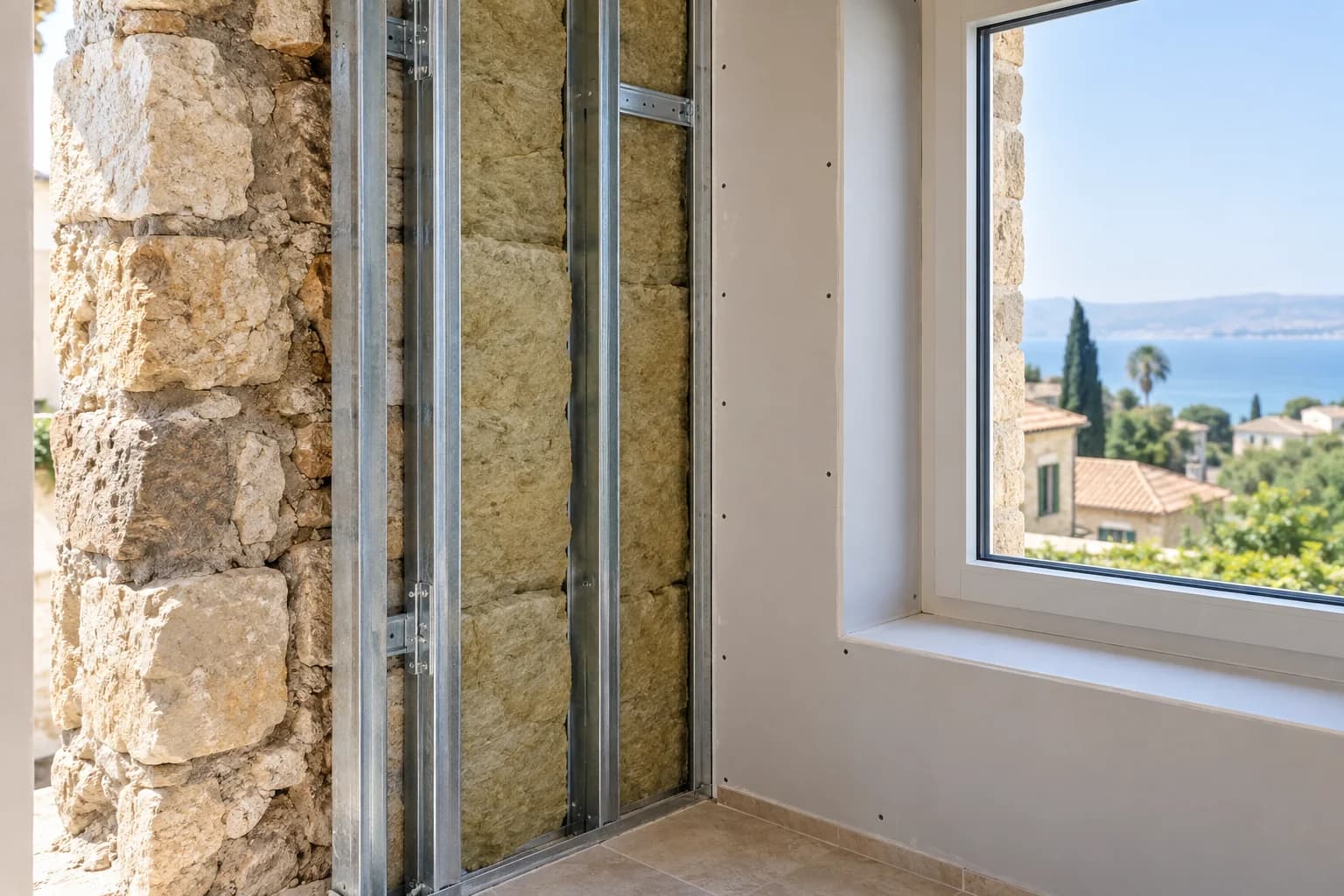
Framing creates space for cables, mineral wool, pipes and backing, but takes more room width. Adhesive fixing is thinner and faster, but only works on a substrate that can be properly prepared. Israeli apartments often have uneven concrete, old paint and weak patches, so the base is checked first.
Decisions before installation
Sockets, switches, internet, AC routes, TV position, cabinets, shelves, mirrors and light lines should be fixed before work starts. After boards are closed, a forgotten socket or fixing point means opening the wall, skimming again and repainting.
Substrate and moisture check
A weak or damp wall should not simply be covered with board. Old paint, plaster, cracks, leak marks, exterior walls, balcony zones and areas near AC routes should be checked first. If the moisture source remains, drywall only hides the problem until stains, smell or swelling appear.
Work sequence on site
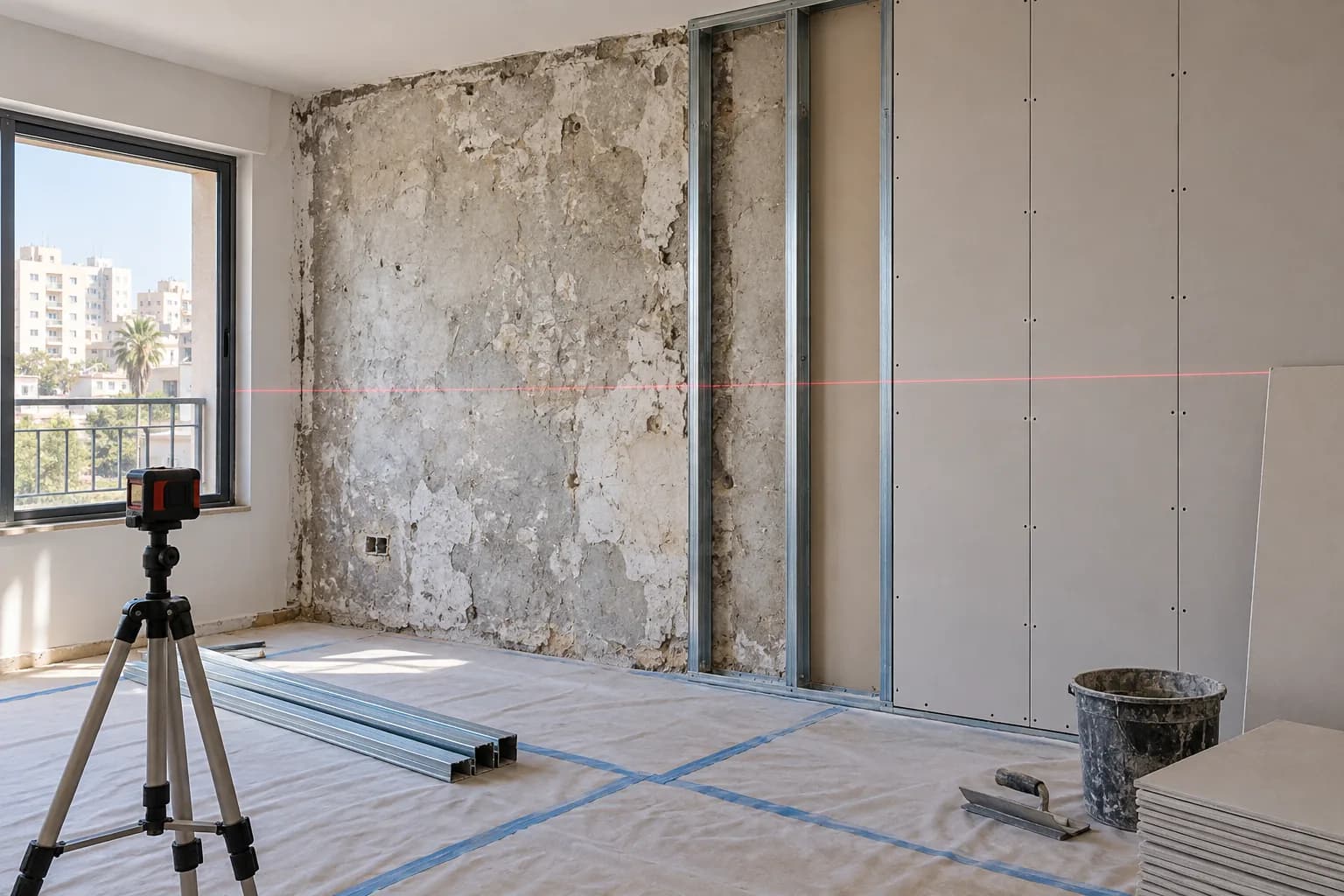
The job starts with measuring wall deviations, choosing the fixing method and marking sockets and backing. Then the frame is built or the substrate is prepared for adhesive fixing. Before boards close the wall, cables, hidden zones, reinforcement and junctions are checked and photographed. Joints, corners, skim coat, primer and paint preparation follow.
Israeli project practice
Around Haifa District, Hadera, Harish, Caesarea and northern Sharon, wall cladding is common in older apartments with uneven concrete, in new apartments for TV walls and in commercial rooms where services need to be covered quickly. Moisture, AC routes, narrow access and occupied homes all affect the plan.
Acoustic comfort inside the cladding
If the wall borders a noisy zone, stairwell, shaft or neighboring room, mineral wool and sealing can be added inside the frame. This is not the same as full soundproofing, but it can reduce the hollow feel and improve comfort when weak points are not left open.
Backing and loads
TV brackets, floating cabinets, shelves, mirrors, slat panels and AC units need a clear fixing base. The board itself should not be the only support for heavy items, so backing, reinforced framing or fixing into the main wall should be planned early.
Paint-ready finish
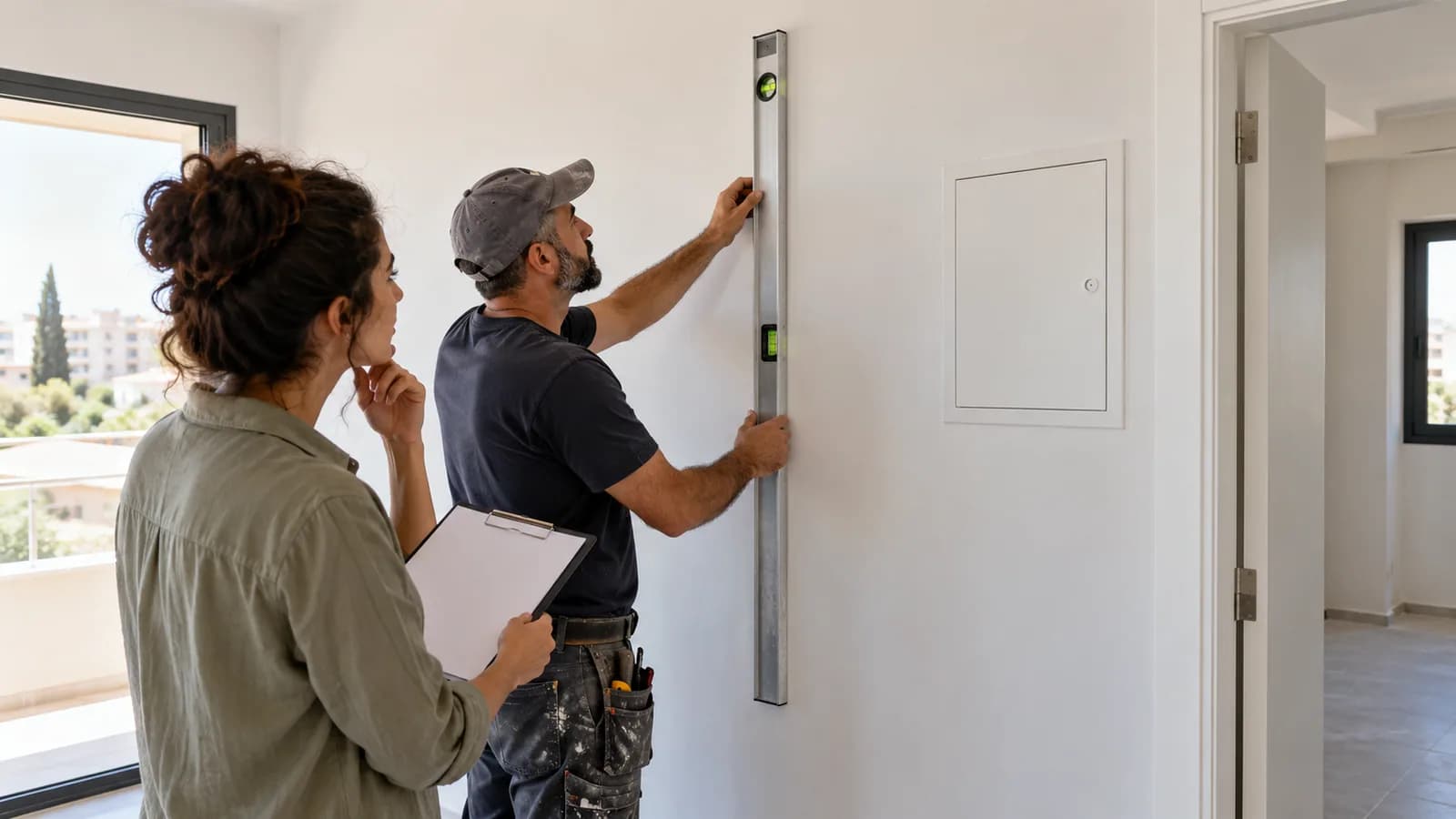
A straight cladding layer is not the same as a finished wall. Joints, outside corners, screw heads, primer, skim coat and side light decide how the surface will look after paint. Long walls, corridors and TV zones need the finish level agreed before installation.
Pricing and realistic expectations
Price depends on area, wall variation, fixing method, layer count, wiring, backing, mineral wool, access, height and finish level. A useful estimate starts from photos of the wall, junctions, sockets and future furniture, not only from square meters.
Measure the room that remains after cladding
Draw the finished wall beside a wardrobe, opening and door. Check useful furniture space and door operation against the selected construction. No standard loss of centimetres is assigned before the system and dimensions are known.
The interface map should cover sockets, skirting, reveals and planned mounted items. Specify the client’s decisions, adjoining work and the responsible specialist where necessary. Wall area is one input, while these interfaces determine the complete scope.
A conditional Hadar apartment illustrates both geometry and access planning. A nearby municipal stair route does not prove crooked walls. The local cladding page gives address preparation; if existing-surface preparation is the real aim, compare that option rather than repeating the levelling article.
Scroll the table horizontally to see all columns.
| Part or situation | What to define | Result boundary |
|---|---|---|
| Wardrobe or furniture | Useful space after the work | Finished measurement |
| Window or door | Where the new plane ends | Junction and reveal depth |
| Service points | What changes and remains accessible | Adjoining work and responsibility |
- Is wall area enough for the quote?
- Openings, junctions and the agreed finish also define the full scope.
- What happens to sockets and skirting?
- Their position and responsibility for changes need agreement before closure.
- Does every wall need cladding?
- No. Some tasks concern preparation of the existing substrate.
Customer reviews of Nikolai's work
Read all reviews on our site8/10MidragThe low ceiling to hide the air conditioner in the kitchen and living room, including high-quality hidden openings in special sizes.Translated review excerptNikolai came and was very helpful in solving the problem in the kitchen, but then we waited more than a month and a half for the work to be done. Finally, the quality of work is perfect.
ש. כ. בנימינה. · Midrag · Read on Midrag
9/10MidragRepair of drywall niches in a very high ceiling following a leak from the roof. The repair and painting of the living room required work with scaffolding. In addition, plastering works due to moisture from the windows and walls.Review summaryFollowing a roof leak, Nikolai repaired drywall niches and a high ceiling, then painted the living room. The customer highlighted his responsibility and the team's workmanship.
מוטי ל. · Midrag · Read on Midrag
5/5EasyReview summaryQuality, timing, reasonable pricing.
Мариам В. · Easy · Read on Easy
Plan the task in a local area
Send photos, dimensions or a short description. A quick call helps understand the construction type, rough budget range and whether an on-site survey is needed.
Relevant services
Estimated prices
Questions
When is drywall cladding better than plaster?
When the wall is very uneven, wiring should be hidden, a TV wall is planned, mineral wool is useful or a flat plane is needed quickly. For small defects with no services, plaster or skim coat may be simpler.
Which is better: framing or adhesive fixing?
Framing is better for cables, mineral wool, backing and larger wall variation. Adhesive fixing is thinner and faster but needs a suitable substrate. Concrete, old paint, moisture and surface strength should be checked on site.
How much room width is lost?
A thin solution takes less space; framing with profiles, mineral wool and services takes more. The exact build-up depends on the goal: flat wall, wiring, acoustics, pipes or backing for furniture.
Can a TV or cabinet be mounted?
Yes, if backing, reinforced framing or fixing into the main wall is planned before boards are closed. Heavy items should not be decided after painting.
Can wiring and sockets be hidden?
Yes, but electrical and internet points must be agreed before boarding. Sockets, cable routes and drivers should remain safe and serviceable, not just hidden without a plan.
Is mineral wool needed inside?
Not always. Mineral wool is useful for reducing hollow sound, adding comfort or improving acoustics slightly. If the goal is only leveling, it may be unnecessary.
Which photos help with an estimate?
Send a wide wall view, floor and ceiling junctions, sockets, corners, problem areas, future furniture and desired finish. A short video along the wall under side light is useful.
What most often ruins the result?
Poor substrate checks, missing backing, forgotten electrical points, weak junctions and saving on finish. Waves, seams and side-light defects are especially visible after paint.
Can a damp wall be clad with drywall?
Active dampness or a leak should not be covered. The source should be found, the substrate dried and ventilation checked before choosing the system. Otherwise moisture stays behind the board and damages the finish.
Is access needed behind the cladding?
If valves, joints, drivers, filters or serviceable technical points remain behind the wall, an access panel or another service route is needed. Closed cladding is acceptable only where nothing requires future service.
How can cracks at joints be reduced?
The substrate must be stable, framing spacing correct, junctions detailed properly, joint tape suitable, drying time respected and primer applied. Long walls and side-lit surfaces need a cleaner finish.
What should be checked before painting?
Check the plane under side light, corners, joints, screw heads, sockets, backing locations and floor or ceiling junctions. Fixing this before paint is faster and cheaper than after furniture is installed.
Guides and practical notes